
- Chennai
- Tamil Nadu
- India
- World
- EntertainmentEntertainment
- Business
- Sports
- Lifestyle
- Technology
- Videos
- Explainers
- Editor's Picks
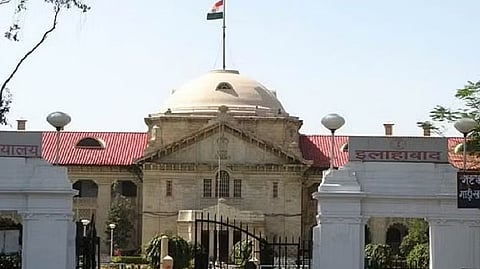
LUCKNOW: No direct evidence of involvement of husband or in-laws is needed to call it a dowry death if a woman dies within seven years of marriage and there is proof of harassment for dowry, the Lucknow bench of the Allahabad High Court has held.
The court made the observation while reducing the life sentence of a man, Sandeep Singh Hora, convicted in a dowry death case, to 10 years' rigorous imprisonment.
Hora was sentenced to life by a trial court in 2010 after being convicted of the death of his wife in 2010 in the state capital's Talkatora Police Station area.
Hora had filed an appeal against the sentence in the high court.
Pronouncing its verdict on the appeal on Friday, a division bench of Justice Abdul Moin and Justice Pramod Kumar Srivastava upheld Hora's conviction for the death of his wife over dowry but reduced the sentence.
The court noted that the woman died an unnatural death in her matrimonial home and that cruelty in connection with a demand for dowry had been established during the trial.
It pointed out that section 304-B IPC incorporates a presumption of dowry death once its requirements are fulfilled. Thus, the absence of direct evidence showing the accused's direct connection with the death does not by itself defeat a prosecution for dowry death.
However, at the same time, the bench held that the trial court had failed to give cogent reasons for imposing the maximum punishment of life imprisonment. It said the trial court did not properly balance the aggravating and mitigating circumstances while deciding the quantum of sentence.
The high court observed that the present case did not fall in the category of a "rare case" warranting life imprisonment.
It took into account that Hora had undergone six years, four months and 19 days of actual imprisonment, or seven years, five months and 21 days with remission, and that no adverse report regarding his conduct or antecedents had been placed before the court.
Hora is around 40 years old, and the incident had occurred 16 years ago, the court observed.
The bench relied on Supreme Court rulings holding that although Section 304-B IPC permits imprisonment for life, the extreme punishment should be imposed only in rare cases.
Accordingly, the bench reduced Hora's sentence, while directing that the period already undergone be adjusted against the sentence.
Hora's convictions and sentences under sections 498-A and 406 IPC and sections 3 and 4 of the Dowry Prohibition Act were, however, left undisturbed.