
- Chennai
- Tamil Nadu
- India
- World
- EntertainmentEntertainment
- Business
- Sports
- Lifestyle
- Technology
- Videos
- Explainers
- Editor's Picks
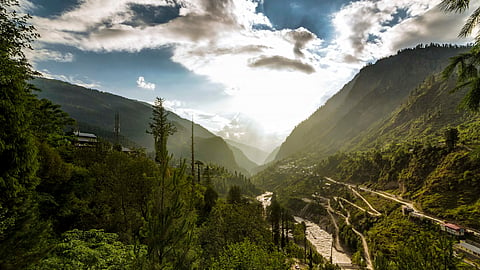
SHIMLA: Rave parties are known for ultra-exclusivity, and few places shut out the world like Parvati Valley, a picturesque gorge in Kullu with a ribbon of river winding through a rough terrain, far removed from modern civilisation.
Parties are spread over a few days; the rough terrain affords organisers ample time to destroy the evidence.
The matter has come into the spotlight ever since the Himachal Pradesh High Court ordered the transfer of the Kullu deputy commissioner, superintendent of police, and sub-divisional magistrate for failing to maintain public order and the nuisance caused by these gatherings.
The orders were pronounced on June 24, and a detailed order came on Saturday.
The case pertains to a ticketed event organised at Green Forest-I and Green Forest-II in Grahan near Kasol from June 7 to June 11.
According to a report submitted by the District Legal Services Authority (DLSA), the venue was an isolated forest area, with around 50 camping tents, private security, and infrastructure capable of accommodating thousands of people.
After the court's intervention, police raided the place and nabbed two tourists with cocaine and LSD.
A Russian national, Caria Kuzminykh, who was performing as a DJ at the event, died due to a suspected drug overdose.
O P Sharma, an old combatant against rave parties, says drugs have existed in the area as far back as the 90s.
The area was already notorious for Malana Cream (cannabis) and over time became notorious for synthetic drugs, the former Convener of the Nasha Nivaran Board, Himachal Pradesh, told PTI on Monday.
"Rave parties are not new in Manali, and the tradition dates back to the 90s. Drugs like LSD and MDM had made inroads in the region long back," he said. Sharma attributed the strengthening of the drug culture to the failure of law and order and intelligence.
"Socio-culture of local people to earn money has also contributed to the problem," he added.
As the Superintendent of the Narcotics Control Bureau (Chandigarh Zonal Unit), Sharma led around a dozen combat and destruction operations in Malana, Manikaran, Tosh, Banjar, Kasol, Magic, Vichin, Pinsu, Thicho, Malander, Avgal Thar and adjoining areas between 2002 and 2006, arresting many. Why the NCB stopped operations in the valley after 2007 is another big question, he said.
Poverty and lack of infrastructure, coupled with ideal climate and topography, led to the cultivation of cannabis, especially in Kasol, which Sharma termed the mother of all drug dens in the state.
Foreigners penetrated the Parvati Valley with hybrid foreign cannabis seeds and even married local women, starting an organised drug trade.
The role of the forest department and the foreign resident office must also be probed in the flourishing of drug culture, he said.
Also, there is a reason behind fewer arrests of drug dealers.
Narrow serpentine trails with limited access points that open along the bank of the Parvati River provide a safe escape to drug peddlers.
The other big factor is secrecy: Only serious "rave" party revellers trek to such events, as any local cafe is enough for an ordinary city traveller.
These small parties, however, have now expanded into corporate events, with venues undergoing a similar change in size, moving from small open enclaves to bigger, denser forests and even private resorts.
For obvious reasons, no one uses the word "rave" when seeking permission for such gatherings, "cultural event" being the go-to word that gets them all the passes.
"Locals totally oppose these rave parties, which may look lucrative for the short term, but in the long term, we do not want visitors to remember this valley for drug tourism rather for our rich cultural traditions," Aman Singh Sood, a local hotelier and social activist from Parvati Valley, said.
Budhi Prakash Thakur, President, Hotel Owners Association of Manali, had no objection to any party as long as drugs are not involved.
"If proper permissions are taken from local administration and there is strict police vigilance at the venue for security and checking drug abuse, parties should be welcomed," he said.
Roshan Lal Thakur, a local, did not mince words when he alleged collusion.
"Without the police patronage, rave parties cannot be organised," he said.
A usual rave features a raw, natural setting with UV-lit decor, sunrise dance floors, art pop-ups, tattoo kiosks and an international crowd. They mostly happen in and around Kasol, in Grahan, Chalal, Katagla, and Pulga villages.
The recent crackdown forced the ravers to retreat to regulated campsites, cafes, and venues in Parvati Valley, say locals.
Promotion of parties on apps like Telegram has become easy for the organisers, but difficult for the police to detect.
In the past three years, the police have registered 6,246 cases under the Narcotic Drugs and Psychotropic Substances Act and filed chargesheets in 5,684 cases.
