
- Chennai
- Tamil Nadu
- India
- World
- EntertainmentEntertainment
- Business
- Sports
- Lifestyle
- Technology
- Videos
- Explainers
- Editor's Picks
NEW DELHI: "I will commit suicide," then prime minister Manmohan Singh had told Chief Election Commissioner SY Quraishi in 2012 after the poll watchdog chief conveyed his anguish over "loose talk" by ministers on the Election Commission functioning.
Singh had also told Quraishi that the Election Commission is not just India's pride; it is the soul of the country's democracy and "if we lose that, we lose everything".
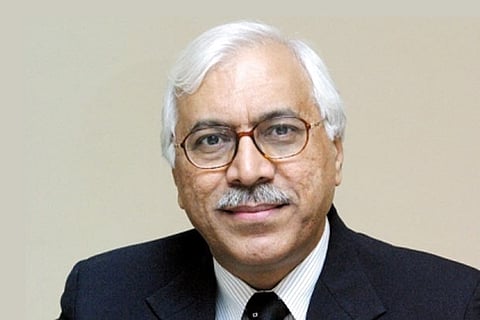
The conversation is recalled in Quraishi's forthcoming book "India and I: A Hundred Memories, Not a Memoir'.
In his book, Quraishi hails Singh as a leader for whom constitutional propriety was not a talking point but a lived conviction.
The former CEC recalls that during an election, in January 2012, in Uttar Pradesh, Salman Khurshid, then Law Minister, promised at a rally that if his party came to power, it would raise the quota for Muslims in jobs from 4.5 per cent to 9 per cent.
"The BJP promptly complained of a Model Code violation, which stipulated that no new scheme could be announced after the election process is set in motion and MCC, Model Code of Conduct, kicked in," Quraishi reminisced in his book published by Hachette India that is set to hit the stands soon.
"We held hearings for four days. Abhishek Manu Singhvi led the Congress side, Arun Jaitley the BJP, two formidable minds sparring over where a campaign promise ended and an inducement began. Eventually, we censured Khurshid, the strongest action available under the Code," recalls Quraishi, who was the CEC from July 30, 2010 till June 10, 2012.
He further states that Khurshid was visibly upset, and soon, voices in the Congress suggested the Commission had become "arrogant or arbitrary".
"Criticism never bothers me; innuendo that chips away at institutional credibility does. This loose talk was not acceptable," Quraishi says in the book.
Quraishi recalls that around that time, he hosted his annual Eid open house and among the guests was Harish Khare, the then Press Secretary of the PM.
"In passing, I mentioned my grievance. Harish asked, 'Should I tell the Prime Minister?' I said, 'Yes. That is exactly why I'm telling you'.
"The next day, the RAX (Restricted Access Exchange) phone rang. 'Prime Minister wants to speak to you urgently'. Moments later, Dr Manmohan Singh came on the line, his voice anxious: 'Quraishi ji, can I see you urgently?' The tone suggested he might come to me. I said. 'Sir, you are the Prime Minister, I'll come whenever you say. We fixed 7 pm," the book narrates.
Quraishi reached the PM's residence that evening.
"Dr. Singh was waiting at the door. He led me in and, before we had even settled, said in a voice that carried genuine anguish: 'Harish told me what you said. If that is what you think, I will commit suicide.' I was speechless. My remark was about some ministers' conduct, not about him," Quraishi reminisced.
Singh had consistently praised the Election Commission as 'India's pride', and our soft power, he says.
"That he could imagine, even for a moment, that I doubted his intentions was unbearable to him. It took a few minutes to calm him. 'I had absolutely no idea,' he said. 'If I had known, I would have blasted them. If ever you have something to say, just pick up the phone and call me'," Quraishi recalls Singh's words.
"Then he (Singh) added something I've never forgotten: 'The Election Commission is not just India's pride; it is the soul of our democracy. If we lose that, we lose everything," the former CEC says in the book.
Quraishi said he was left shaken, not by politics, but by encountering a "leader for whom constitutional propriety was not a talking point but a lived conviction".
"I immediately shared what had transpired with T.K.A Nair, his Principal Secretary, and Shivshankar Menon, his National Security adviser. Harish, too, spoke of it to common friends. None of us treated it as a secret; it was too important a glimpse into the character of the man leading our country," he says.
Quraishi said the innuendo stopped after the meeting and a quiet word had been passed, and nothing more was needed.
"I have met many powerful people in my life but few who wore power so lightly, or felt its weight so deeply. In a profession that rewards a thick skin, Dr Manmohan Singh stood out for a rare sensitivity in the exercise of power," says Quraishi in his book.
In the fascinating collection of one hundred episodes from his life, Quraishi chronicles the events, dilemmas and unexpected turns that marked his career in the civil services.
