
- Chennai
- Tamil Nadu
- India
- World
- EntertainmentEntertainment
- Business
- Sports
- Lifestyle
- Technology
- Videos
- Explainers
- Editor's Picks
NEW DELHI: World temperatures are running dangerously close to crossing the 1.5-degree Celsius global warming threshold, and 50 years of technological progress will not reverse the damage, a top United Nations official has said, warning that "things may not return to normal."
The UN Environment Programme (UNEP) report, titled 'Limiting Overshoot' and released on Wednesday, cautions that global temperatures are set to temporarily breach the 1.5-degree Celsius mark above pre-industrial levels within the next few years.
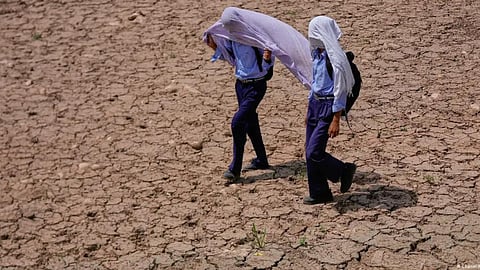
This overshoot will intensify extreme weather, destroy fragile ecosystems, and threaten the survival of small island developing nations, making immediate and sustained cuts in greenhouse gas emissions non-negotiable.
Balakrishna Pisupati, head of UNEP India, said long-term policy and investment decisions must urgently adapt to changes that are permanent. He emphasised that while some environmental impacts can still be reversed, others are permanent, and understanding that distinction is vital for every country, community, and individual across the world.
Highlighting South Asia's severe vulnerability, Pisupati noted that the region is caught in a web of overlapping crises. "South Asia is challenged by demographic pressures, income inequality, unequal access to technology, and a just energy transition. Like many developing countries, South Asia is largely at the receiving end of global warming," he said.
“Many of these changes don't respect political boundaries, which is why we have multilateral processes, negotiations, and frameworks like the UN Framework Convention on Climate Change (UNFCCC)," he added.
Pisupati pointed out that several climate "clocks" are ticking simultaneously, each moving at its own speed and time horizon -- spanning the heat clock, glacier clock, sea level clock, ecosystems clock, and human clock.
"Take the heat clock -- the moment we reduce warming, we may see an immediate effect. But the glacier clock is different. Even if temperatures fall back to 1.2 or 1.3 degrees Celsius after a hundred years, glaciers will not simply re-form, and ice caps will not return to how they were in the 1800s or 1900s," he explained.
He added that the sea-level clock moves even faster, warning that its disastrous impact will be "impossible" to reverse over a decade even if warming is capped at 1.5 degrees Celsius.
