
- Chennai
- Tamil Nadu
- India
- World
- EntertainmentEntertainment
- Business
- Sports
- Lifestyle
- Technology
- Videos
- Explainers
- Editor's Picks
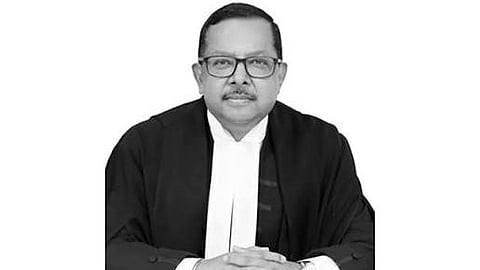
NEW DELHI: Supreme Court judge Ujjal Bhuyan on Sunday said that students expressing a different point of view or asking questions cannot be threatened with punitive action, as such an approach is unconstitutional and a misuse of power.
A university should be where the habit of thinking freely begins, and a student does not hesitate to ask difficult questions, the top court judge asserted, while underscoring that the right to question was not an act of defiance, and that "an intolerant mind" is at odds with the spirit of the Indian Constitution.
The top court judge was speaking at the 13th convocation ceremony for the postgraduate students of National Law University, Delhi.
"When students express a different point of view, when students ask questions, they cannot be threatened with punitive action. That is unconstitutional. That is a misuse of power and office," said Justice Bhuyan.
"It's (university) a place where individuals encounter ideas that may be different from their own, where established positions can be examined and questioned, and where disagreements can take place through reason rather than hostility. If we want a democratic society that respects liberty and difference, that culture has to begin from the universities," he added.
In his convocation address, Justice Bhuyan said the Indian Constitution recognises that a free society will witness different opinions and beliefs, and that participation in public life will be meaningful only when there is space for dissent.
He stated that tolerance is a "constitutional value", and being the land of Buddha and Gandhi, India has no place for an "intolerant mind", which is a form of violence.
"Our constitution protects the freedom to speak, to think, and to believe differently. Intolerance begins to undermine that framework when disagreement or dissent is no longer treated as a legitimate difference of opinion but as something that must be silenced, rejected or punished. The ability to live with disagreement is, therefore, not merely a social virtue. It is the very essence of a liberal constitutional democracy," said the judge.
Justice Bhuyan emphasised that the responsibility of legal professionals and scholars was to ensure that even in moments of dissent, the constitutional values of liberty, equality, dignity, and justice continue to remain at the core of the understanding of law.
"A democracy becomes meaningful not when everyone speaks the same language of thought but when different voices can co-exist, be heard and be treated with dignity," he asserted.
"The majority of a democracy is reflected not merely in how it treats opinions that are popular...but how it responds to opinions that are difficult, unpopular or sometimes very inconvenient," he said.
