
- Chennai
- Tamil Nadu
- India
- World
- EntertainmentEntertainment
- Business
- Sports
- Lifestyle
- Technology
- Videos
- Explainers
- Editor's Picks
MUMBAI: To those who knew him, Mumbai doctor-mountaineer Milind Chitley was far more than a friend—and now, with each passing day after the August 26 Nepal floods, the hopes of his family and well-wishers to find him are fading.
As memories of his role as the official doctor of the historic 1988 first Indian civilian Kanchenjunga expedition resurface, longtime friend and expedition partner Charu Joshi on Monday recalled his decades-long bond with the Himalayas.
Five days after the disaster, rescuers have prioritised those who can be saved more easily, while digging through the soil has not yet begun, Joshi told reporters.
"It is a very complicated process," he said.
For Joshi, the uncertainty is difficult to reconcile with a friendship forged in the mountains more than 40 years ago.
"He was not just a friend, he was much more than that," he said, his voice heavy with emotion.
Chitley, a medical practitioner from Andheri in Mumbai and founder of Hills and Trails tour company, had been associated with Himalayan mountaineering and expeditions for nearly three decades.
He and his wife led a 61-member Kailash Mansarovar pilgrimage group that has been missing after flash floods in the Nepal-Tibet border region on August 26.
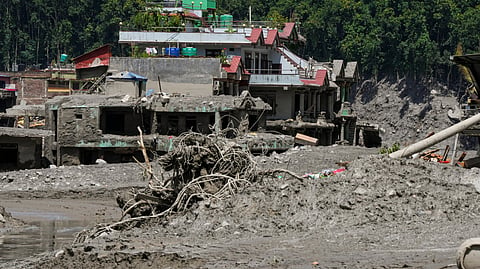
The death toll from flash floods in Nepal rose to 903 on Monday, with more bodies being recovered and nearly 4,250 people still missing following the disaster, as per authorities.
Joshi said the hopes of finding him alive had now become extremely bleak.
Chitley's association with the mountains went back decades, but the 1988 Kanchenjunga expedition remained one of the defining chapters of his mountaineering journey. Known as "Kangchenjunga 88", the expedition was a landmark attempt by civilian climbers, largely from Maharashtra, to scale the world's third-highest peak without the military infrastructure traditionally available to such expeditions.
Chitley was the expedition's official doctor, Joshi said.
Though the team did not make it to the summit, it crossed the formidable 8,000-metre mark after negotiating some of Kanchenjunga's most technically challenging sections, marking a significant achievement for India's civilian mountaineering movement.
Joshi, who had been associated with Chitley since 1981-82, recalled their shared journey to the high Himalayas and said the expedition had cemented a friendship that lasted more than four decades.
"In 1988, the first-ever civilian expedition was held at Mt Kanchenjunga, and he was our official doctor. I was probably the first civilian to reach above 27,000 feet and return. We were very close friends," Joshi said.
The doctor continued to combine his medical practice with his passion for the mountains for years, making the Himalayas an integral part of his life.
"He was not just a friend, he was much more than that," Joshi stressed.
Chitley was in Nepal when the flash floods struck last week. Joshi, who has since returned to India, travelled to Kathmandu and attempted to assess the situation in coordination with the Indian Embassy. He also contacted the local agency Richa Treks to ascertain whether there was any possibility of Chitley's survival.
"I asked him to tell me upfront about the chances of survival. He said the chances are bleak, for the simple reason that the immigration centre on the Nepal-China border always has a huge queue and the flood hit the same location," Joshi said.
An estimated 600-700 people were believed to be at the immigration centre when the floodwaters rushed through the area, making the possibility of survivors extremely low, he said.
The area where the incident occurred has since been cordoned off by the Nepal Army, Nepal Mountaineering Association and police, while a Trishuli control centre has been established by the military, he said.
The group led by Dr Chitley had departed Mumbai on August 23 for Kathmandu and was last heard from on August 25 evening, hours before high-altitude torrents destroyed key immigration infrastructure on the morning of August 26. They were to return to Mumbai on September 6 after completing their Kailash Parikrama on September 2.
Dr Chitley had posted a notice outside his clinic, stating it would remain closed until September 6.
