
- Chennai
- Tamil Nadu
- India
- World
- EntertainmentEntertainment
- Business
- Sports
- Lifestyle
- Technology
- Videos
- Explainers
- Editor's Picks
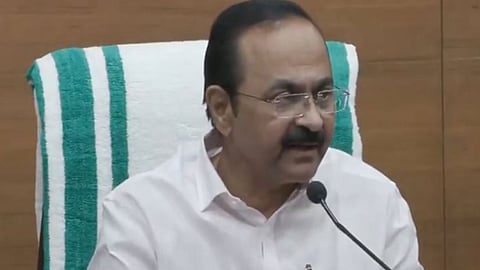
THIRUVANANTHAPURAM: Kerala Chief Minister V D Satheesan on Friday announced a series of tax relief measures, amnesty schemes and revisions to vehicle taxes while presenting the revised state Budget in the Assembly, saying the steps are aimed at easing the burden on taxpayers, supporting businesses and improving revenue mobilisation.
The revised Budget estimates for 2026-27 project revenue receipts of Rs 1,69,646.37 crore against revenue expenditure of Rs 2,05,001.67 crore, resulting in a revenue deficit of Rs 35,355.30 crore.
The Budget estimates capital expenditure (Net) at Rs 19,651.41 crore, public debt (Net) at Rs 52,364.13 crore, and an overall deficit of Rs 41.23 crore. The government has also announced additional expenditure of Rs 1,080.95 crore, taking the cumulative deficit at the end of the year to Rs 1,504.63 crore.
One of the key tax relief announcements was the Flood Cess Arrears Settlement Scheme, 2026.
The chief minister, who holds finance portfolio, noted that although the one per cent Flood Cess levied on GST for Business-to-Customer (B2C) supplies between August 1, 2019 and July 31, 2021 had ended, substantial arrears remained unpaid.
To help businesses clear these dues, the government announced that taxpayers who pay the entire outstanding principal amount of Flood Cess will receive a complete waiver of interest and penalty.
The last date to settle arrears under the scheme is March 31, 2027
The government also unveiled a Small Arrear Waiver Scheme, 2026 for pending dues under pre-GST tax laws.
Under the proposal, arrears involving tax amounts of more than Rs 50,000 but not exceeding Rs 2 lakh relating to assessment orders up to the 2017-18 financial year will be fully waived along with the related interest and penalty.
However, the concession will not apply to arrears linked to the sale of liquor under the Kerala General Sales Tax Act, 1963.
In the liquor sector, the Budget proposed fresh sales tax rates for low-strength alcoholic beverages under the Kerala General Sales Tax Act.
Products with 0.5 per cent to 10 per cent alcohol by volume (v/v) will attract 120 per cent sales tax, while those with more than 10 per cent and up to 20 per cent alcohol by volume will be taxed at 175 per cent.
The Budget also announced changes in motor vehicle taxation to support public transport and promote electric mobility.
For trailer vehicles, the additional tax slab applicable to vehicles weighing above 20,000 kg has been removed, bringing them under the same tax structure as trailers above 15,000 kg.
Road tax on electric vehicles has also been revised. Vehicles priced up to Rs 10 lakh will now attract 3 per cent tax instead of 5 per cent, while those costing between Rs 15 lakh and Rs 20 lakh will see the rate reduced from 8 per cent to 5 per cent.
Tax on electric vehicles priced above Rs 40 lakh has been increased from 10 per cent to 15 per cent, while other slabs remain unchanged.
The government further enhanced the motor vehicle tax concession for differently-abled persons by increasing the eligible vehicle value limit from Rs 7 lakh to Rs 15 lakh.
An e-challan Amnesty Scheme was also announced, allowing citizens to settle pending traffic challans by paying 50 per cent of the challan amount.
In the Registration Department, the government proposed a One-Time Settlement Scheme to dispose of 1,46,355 undervaluation cases involving around Rs 703 crore in deficit stamp duty dues accumulated between 1986 and 2023.
As a one-time measure, additional stamp duty will be waived in cases relating to the period up to March 31, 2010, where the amount determined in the final order is below Rs 10,000.
The Budget also extended the existing 4 per cent concessional stamp duty available for eligible flats and apartments to Kerala Real Estate Regulatory Authority (K-RERA)-registered villas that comply with prescribed standards.
Additionally, if deficit stamp duty determined in an undervaluation case remains unpaid even after all appellate remedies are exhausted, and payment is not made within 60 days of the final order, interest at 1 per cent per month (12 per cent per annum) will be charged until payment.
