
- Chennai
- Tamil Nadu
- India
- World
- EntertainmentEntertainment
- Business
- Sports
- Lifestyle
- Technology
- Videos
- Explainers
- Editor's Picks
NEW DELHI: Building on the success of Shubhanshu Shukla's maiden journey to the International Space Station (ISS), India is set to take its first steps towards its own human space flight when the uncrewed Gaganyaan mission soars to the skies later this year.
Skyroot Aerospace and Agnikul Cosmos – private players in the space sector – are also gearing up for launching satellites on the home-built rockets Vikram-1 and Agnibaan, as they eye a foothold in the burgeoning small satellites launch market.
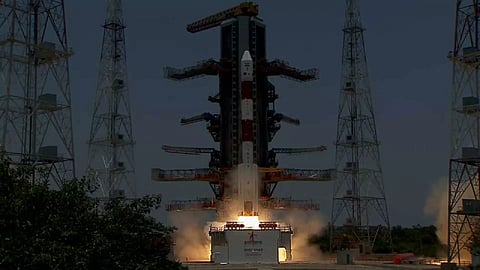
The new year will also witness the launch of the Polar Satellite Launch Vehicle (PSLV), built entirely by Hindustan Aeronautics Limited and Larsen and Toubro after bagging the contract from ISRO in 2023.
The first orbital test of Gaganyaan, called G-1, with a humanoid robot Vyommitra onboard, is expected to be launched by March this year, Science and Technology Minister Jitendra Singh told Parliament last month.
The humanoid robot will simulate the functions of an astronaut, and the spacecraft will validate critical crew systems in low Earth orbit before India eyes a human space flight sometime in 2027.
"(Year) 2026 will solidify India's global stature through breakthroughs in quantum technologies via PSLV-N1, Agnikul's 3D printed engines and Pixxel's hyperspectral constellations, even as we bridge infrastructure needs like dedicated private launch pads," said Lt Gen A K Bhatt, Director General, Indian Space Association (ISpA).
Last year, Shukla scripted history when he became the first Indian to travel to the International Space Station (ISS) as part of the Axiom-4 commercial mission.
The astronaut spent 18 days at the orbital laboratory, conducting micro-gravity experiments, an experience that will prove immensely valuable for India's human spaceflight.
Incubated at IIT-Madras, space start-up Agnikul Cosmos also plans to launch reusable rockets and also convert upper-stages of its rockets, as functional satellites with an eye on reducing costs.
"Our recently granted patents for converting upper stages into functional satellites represent a breakthrough in launch economics," Srinath Ravichandran, founder and CEO Agnikul Cosmos, told PTI.
He said that after its first orbital launch, Agnikul planned one rocket launch every month, keeping in mind customer demands and addressing them through original, technology-led solutions.
Skyroot Aerospace unveiled the Vikram-1 rocket last month in the virtual presence of Prime Minister Narendra Modi. The company aims to launch it with commercial payloads early this year.
Bengaluru-headquartered Digantara Industries launched the world's first space surveillance satellite, SCOT, in March last year and plans to launch eight more satellites this year.
"We already have manifested at least eight SCOT satellites for 2026 on SpaceX and the remaining seven will be placed in orbit in 2027," Digantara Industries founder and CEO Anirudh Sharma told PTI.
ISRO will also launch the TDS-01 satellite to demonstrate technologies such as the high thrust electric propulsion system, the quantum key distribution, and indigenous travelling wave tube amplifier.
The High Thrust Electric Propulsion System (HTEP) will enable ISRO to launch all-electric satellites in future. This technology will make satellites lighter and reduce the dependence on chemical fuels.
"The technologies and components, once proved in TDS-01, will be employed in navigation and communication missions in near future," Jitendra Singh said.
A four-tonne communication satellite carries more than two tonnes of liquid fuel, which is used to fire thrusters to steer the satellite in space. But in the case of electric propulsion, fuel requirement reduces to just 200 kg, an official said.
The indigenous TWT (Travelling Wave Tube) Amplifier will enable self-reliance in critical technologies of satellite transponders.
The Small Satellite Launch Vehicle (SSLV) will also launch a dedicated satellite before March 2026.
Space-tech start-up GalaxEye also plans to launch the world's first multi-sensor Earth observation (EO) satellite, Mission Drishti, in the first quarter of this year, marking the beginning of setting up a constellation of satellites over the next four years.
The satellite, offering 1.5-metre resolution, will enable governments, defence agencies and industries to perform advanced geospatial analysis across a wide range of applications, including border surveillance, disaster management, defence, utilities and infrastructure monitoring, agriculture, as well as financial and insurance assessment — providing real-time environmental and structural insights.
