
- Chennai
- Tamil Nadu
- India
- World
- EntertainmentEntertainment
- Business
- Sports
- Lifestyle
- Technology
- Videos
- Explainers
- Editor's Picks
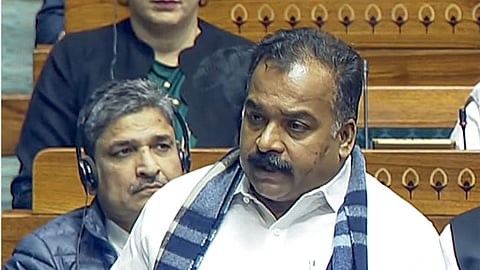
NEW DELHI: Congress MP Manickam Tagore on Friday (March 6) raised concerns over the proposed population policy announced by Andhra Pradesh government, which suggests providing an incentive of Rs 25,000 to families for having a third child or more.
In a post on X, Tagore questioned the policy's rationale, stressing that the priority for governments today should be building a skilled workforce capable of adapting to a rapidly changing global economy driven by technologies such as Artificial Intelligence, robotics and automation.
Referring to the draft policy, Tagore said that while the Andhra Pradesh government has proposed financial incentives to encourage larger families, the move raises serious concerns about policy direction at a time when countries across the world are preparing for a future where many traditional jobs may disappear due to technological advancements.
"The Andhra Pradesh government led by N Chandrababu Naidu has unveiled a draft population policy offering ₹25,000 for a third child and other incentives for larger families. This raises a serious and troubling question. At a time when Artificial Intelligence, robotics and automation are rapidly transforming the global economy, countries are preparing for a future where many traditional jobs may disappear. The real challenge before governments today is to create skilled citizens who can survive and thrive in this new economy," Tagore wrote on 'X'.
He argued that India already has the world's largest population and is expected to remain among the most populous countries for decades. According to him, the country's real challenge is not population size but the lack of quality education, skills, employment and opportunities for millions of young people entering the workforce every year.
Tagore further said that instead of focusing on strengthening human capital through better education, healthcare and job creation, encouraging population growth through monetary incentives reflects short-term political thinking rather than forward-looking governance.
"India is already the most populous country in the world, and will remain one of the largest populations for the next 50 years. Our problem is not a shortage of people. Our problem is the lack of quality education, skills, jobs, and opportunities for the millions of young Indians entering the workforce every year. Instead of focusing on human capital, education, healthcare and job creation, this policy encourages population growth with cash incentives. That is not forward-looking governance it is short-sighted politics," the 'X' post said.
He also criticised what he described as an ideological narrative that links population growth with political or demographic considerations. Tagore warned that when public policy begins to follow ideological motivations instead of economic realities, it risks pushing society in the wrong direction. Drawing comparisons with countries such as Japan and South Korea, he noted that those nations promote higher birth rates because they are facing population decline and rapidly ageing societies. India, he said, faces the opposite challenge, ensuring jobs, education and dignity for its existing population.
"More importantly, this thinking dangerously echoes the narrative long promoted by Sanghi's -- the idea that population numbers must be increased for political or demographic reasons. When public policy begins to follow ideological scripts instead of economic realities, it risks pushing society in the wrong direction.
Countries like Japan or South Korea encourage higher birth rates because they face population collapse and rapidly aging societies. India faces the opposite challenge we must provide jobs, education and dignity to our existing population first," Tagore said.
Tagore added that the key issue for India in the age of Artificial Intelligence is not how many people the country has, but how many educated, skilled and productive citizens it can create. Without adequate opportunities, he cautioned, population growth risks turning a demographic dividend into a demographic burden, and public policy must focus on preparing India for the future of work rather than treating population growth as a political objective.
"The real question is not how many people India will have, but how many educated, skilled and productive citizens we can create in the age of Al. Population without opportunity is not a demographic dividend. It becomes a demographic burden. Public policy must prepare India for the future of work, not follow an ideological model that treats population growth as a political project," the 'X' post said.
Andhra Pradesh Chief Minister N Chandrababu Naidu had earlier said that the state government is considering a new population management policy that includes financial incentives to encourage families to have more children, announcing a proposed Rs 25,000 assistance at the time of delivery for parents who have a second or third child.
Speaking in the Andhra Pradesh Legislative Assembly, CM Naidu presented the state's proposed population management policy. He said that currently about 58 per cent of families have only one child, around 2.17 lakh families have two children, and nearly 62 lakh families have three or more children. He also noted that around three lakh families have only one child instead of two, while another three lakh families have more than two children.
To address this, the government is proposing financial incentives for childbirth. Under the plan, parents who have a parents who have a second child or more will receive Rs 25,000 at the time of delivery.
The Chief Minister explained that the state's Total Fertility Rate (TFR) is currently 1.5, whereas the ideal level should be 2.1 to maintain demographic balance. He said that as economies grow, birth rates tend to decline, which can create workforce shortages and long-term economic challenges.
