
- Chennai
- Tamil Nadu
- India
- World
- EntertainmentEntertainment
- Business
- Sports
- Lifestyle
- Technology
- Videos
- Explainers
- Editor's Picks
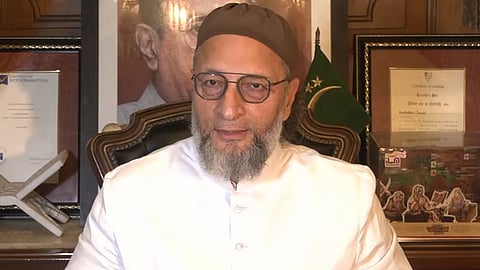
NEW DELHI: AIMIM chief Asaduddin Owaisi on Wednesday moved the Supreme Court challenging the manner in which the Election Commission is conducting the SIR, claiming that the constitutional and statutory safeguards have been overlooked and the voting rights of eligible citizens have been jeopardised.
A bench comprising Chief Justice of India (CJI) Surya Kant and Justice Joymalya Bagchi took note of the submission of advocate Nizam Pasha, appearing for Owaisi, that the plea be listed on Thursday along with other pending ones on the issue.
Assuring consideration, the CJI-led bench indicated that it would examine the matter and the reference to similar petitions.
Pasha submitted that the relevant cases had been identified in the memo accompanying his request for listing.
Congress leader Rahul Gandhi and 10 prominent opposition leaders and others have also moved the top court against the alleged malpractices in the Special Intensive Revision (SIR) of electoral rolls and other related processes.
Owaisi, in his plea filed through lawyer Lzafeer Ahmad, has sought judicial intervention to ensure that the revision process complies with the Representation of the People Act and the Registration of Electors Rules, 1960.
"Declare that the decisions affecting the SIR not duly authorised in accordance with the law, including Section 18 of the Chief Election Commissioner and Other Election Commissioners (Appointment, Conditions of Service and Term of Office) Act, 2023, are liable to be set aside," the plea said.
The plea said it does not challenge the Election Commission's (EC) authority to conduct an intensive revision of electoral rolls.
Instead, it questions whether the EC has exercised that authority lawfully, transparently and through procedures prescribed by law.
"Declare that the forms prescribed under the Registration of Electors Rules, 1960, cannot be superseded or supplemented by alternative forms or substantive conditions introduced through portal modifications or executive instructions unsupported by law," it said.
The plea sought a direction to the poll panel to forthwith restore Form 6 on the ECINET portal to the form prescribed under the Registration of Electors Rules.
It also sought a direction that no application for inclusion in the electoral roll be obstructed, rejected or kept pending on account of the applicant's inability or refusal to answer the additional declaration, and that every application so obstructed or rejected be received and decided afresh in accordance with law.
The plea raised concerns relating to allegations that certain decisions and communications issued in the name of the EC were made without the knowledge or approval of its other election commissioners.
Citing a media report, Owaisi referred to reported objections by two election commissioners to decisions allegedly taken without their concurrence.
He sought judicial scrutiny of whether the EC's constitutional powers were exercised in accordance with Article 324 and Section 18 of the Chief Election Commissioner and Other Election Commissioners (Appointment, Conditions of Service and Term of Office) Act, 2023.
The plea raised another major concern related to the alleged use of software-generated classifications, including "logical discrepancy" flags, and automated objections seeking deletion of names from electoral rolls.
The petition questioned whether such systems can effectively displace the statutory responsibilities of Electoral Registration Officers (EROs), particularly where deletion notices are allegedly generated without independently recorded reasons or adequate verification.
The plea sought a declaration that voters should not be excluded or required to re-establish their eligibility solely on the basis of software-generated flags without following the prescribed legal procedure.
The plea also challenged deletions allegedly based on bulk, automated, unreasoned or time-barred objections, including objections filed through Form 7, and sought the quashing of deletions found to have violated the applicable rules.
The petition raised concerns over alleged arbitrary and discriminatory treatment of voters, referring to media reports of bulk objections disproportionately directed against Muslim electors.
It also cited reported instances in which eligible voters were excluded despite favourable determinations by statutory or judicial authorities, while other electors allegedly received more relaxed verification.
It said these allegations raised questions under Articles 14, 15(1), 325 and 326 of the Constitution, which concern equality before the law, non-discrimination, non-exclusion from electoral rolls on specified grounds and the constitutional framework governing elections and adult suffrage.
The claims are presented as grounds for judicial examination and have not been established as findings of the court.
Seeking greater transparency and accountability, Owaisi urged the top court to direct the poll panel to preserve and produce its minutes, internal communications, approvals and recorded objections relating to the SIR.
