
- Chennai
- Tamil Nadu
- India
- World
- EntertainmentEntertainment
- Business
- Sports
- Lifestyle
- Technology
- Videos
- Explainers
- Editor's Picks

CHENNAI: The Mylapore Festival has become a much-awaited annual event.
What was the original idea behind starting this festival, and how has that vision evolved over the years?
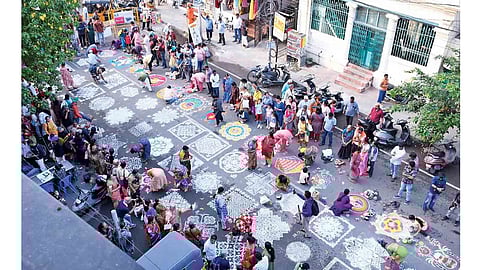
The festival traces its origins to a kolam contest held in the late 1990s. Moahan Venkatesan, Senior Vice President, SF, who has been involved with the festival right from its inception, told me, “Over time, this simple idea grew from a kolam contest in the 1990s into a vibrant cultural celebration by incorporating traditional games, folk arts, and other community events.”
The choice of kolam, rooted in Mylapore’s deep cultural heritage, inspired the starting point. During the month of Margazhi, it is common to see large, intricate kolams adorning the entrances of homes in the area. This tradition made kolam the natural centrepiece of the festival. According to Moahan, today the festival celebrates our traditions across arts, music, drama, dance, food, folk art, games, and, of course, kolam and rangoli.
The 2026 festival begins with five events even before the main weekend.
What was the thinking behind spreading the festival across two weekends?
The first weekend features traditional games like Pallankuzhi and Dayakattam, along with two heritage walks. These activities are scheduled alongside the kolam contest, as participants in the games often take part in the kolam event as well. Spreading the festival across two weekends helps ease the workload for volunteers and allows for more heritage walks this year. Additionally, this arrangement creates a week-long buzz leading up to the main festival from January 8 to 11, serving as an engaging prelude to the celebrations.
Traditional games like Dayakattam and Pallankuzhi continue to be a strong feature. Why is it important to keep these formats alive in a modern festival?
Traditional games like Pallankuzhi and Dayakattam are on the brink of disappearing, as today’s young, digitally native generation is largely unfamiliar with them. To revive and preserve these cultural treasures, the festival continues to feature these games prominently, ensuring they remain a living part of our heritage.
Over the years, what changes have you noticed in how people perceive Mylapore because of the festival? Are there any moments or stories from past festivals that have personally stayed with you?
Mylapore continues to be seen as a vibrant cultural hub, with the four Mada Streets catering to diverse needs and the iconic 7th-century Kapaleeswarar Temple remaining the focal point. Visitors often stop by the temple, explore the Mada Streets, shop, enjoy local food, and then head home. During the Mylapore Festival, this buzz multiplies - the streets transform into a visual feast with intricate kolams and captivating dance and drama performances on the main stage. Hundreds of people flock to experience multiple events in one place, and street vendors benefit from the surge in footfall and business.
The Spirit of Mylapore Award, which recognises an eminent Mylapore-based individual or institution for their inspiring contributions to society at large, is the highlight of the Sundaram Finance Mylapore Festival for me. The food walk and the kolam contest are also highlights, showcasing the culinary and creative aspects of the festival.
How do you see the festival contributing to cultural memory and local pride, especially among younger residents?
During the festival, it’s heartening to see younger participants enthusiastically engaging in traditional games like Dayakattam and Pallankuzhi, often competing with elders. Their active involvement in the kolam contest further reflects how the festival fosters cultural memory and instils a sense of local pride across generations.
What are the challenges in sustaining a community-centric festival year after year?
Keeping the entire festival citizen-centric, tradition-focused, and volunteer-driven, without any commercial considerations, is an important objective. Spreading the word so that as many citizens as possible can savour the festival is another challenge in an increasingly digital and technology-driven world with multiple sources of entertainment. Logistics are always complicated for a grassroots-oriented festival. For instance, if a main-stage event coincides with a Kapaleeswarar Temple procession, the programme must be paused until the procession clears. Additionally, since the main stage is in an open space, unexpected rain can disrupt performances, making weather another key challenge. At such times, people may be disappointed if they are unable to watch the events.
What would you like first-time visitors to take away from the festival?
For first-time visitors, the festival offers fun as its central spirit: a joyous, light-hearted experience for all ages; the chance to rediscover childlike wonder while wandering through the streets; and the joy of a traditional tiruvizha experience.