
- Chennai
- Tamil Nadu
- India
- World
- EntertainmentEntertainment
- Business
- Sports
- Lifestyle
- Technology
- Videos
- Explainers

CHENNAI: Students from the Department of Ancient History and Archaeology, University of Madras, have identified a pre-historic archaeological landscape in the Gandikota–Diguvapattinam region of Andhra Pradesh, documenting evidence of human occupation from the Lower Palaeolithic period to the historical era.
The discovery was made under the guidance of excavation director Jinu Koshy, and led by R Sudarshan and comprising archaeologists R Sasidharan, S Sanjay, K Bharath, Parthiban and Jeeva.
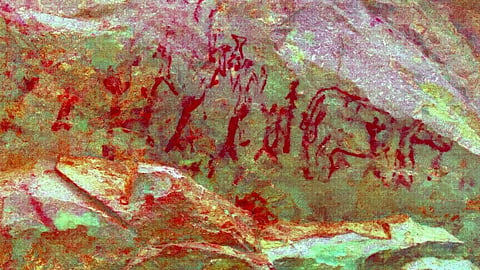
While pursuing postgraduate studies in the department, they conducted field studies and documented 35 rock shelters with rock paintings, a large collection of stone tools and extensive rock art panels across the landscape. The findings provide fresh insights into the development of prehistoric cultures in South India.
According to preliminary investigations, the site contains evidence of continuous or repeated human activity over a long period. A notable feature is the presence of superimposed paintings, indicating multiple phases of artistic activity and the repeated use of shelters over thousands of years. The rock paintings, executed in red, white and black pigments, depict scenes of daily life, wildlife, aquatic life, hunting, fishing, handprints and symbolic motifs. Researchers stated that some paintings may reflect observations of seasonal and astronomical cycles.
Gandikota, located on the banks of the River Pennar, around 15 km from Jammalamadugu in Kadapa district, is known for its historic fort and canyon. Diguvapattinam is a village situated near the Gandikota–Jammalamadugu region.
Researchers said analysis, scientific documentation and further study of the discoveries are under way. Detailed academic publications are also being prepared. They emphasised the need for systematic documentation, conservation and further research, stating that the Gandikota–Diguvapattinam landscape is emerging as an important prehistoric heritage zone in South India.