
Chennai
IF the audience wanted scantily clad heroines, making a jungle movie was the best excuse. Jungle movies with a white man or woman surviving alone in the forest had caught Hollywood’s fancy. But, in 1941, it wasn’t easy to make an Indian jungle picture because heroines were meagre. And scantily dressed ones scantier still.
Actresses of the forties did not array themselves in their smartest clothes to go out to besiege producers in their offices. Local women refused to be sullied by the eye of unknown men. Even on the Tamil stage, men donned the roles of women with suitable anatomical make ups. Anglo Indian women were enlisted to play sexy Indian roles in silent movies. One British woman was even undressed as Draupadi in a silent Mahabarat movie.
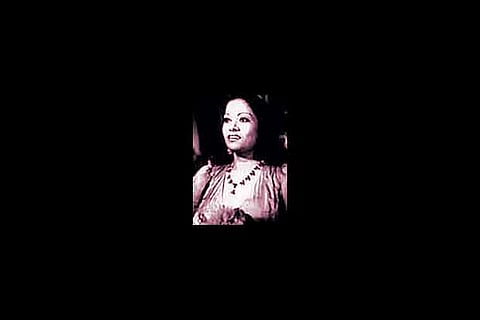
Director Bhagawan dada chose a very suggestive title for a jungle story — Vanamohini. The script had a forest girl in unfettered freedom, with an elephant for pet. (One strange paradox. Many years later MGR as an orphan in a movie would play host to four elephants as pets) For long the stubborn director searched for an erotic desi woman in what was a puritan period. Somebody suggested an actress from Lanka, K Thavamani Devi, and he grumbled at having to travel across the sea to just choose a heroine.
Thavamani had experience in acting but had been sadly miscast. The previous director (underestimating her assets) had cast her as rishi patni Ahalya — the wife of a sage who becomes a block of stone at around intermission due to a curse. Saddened by the audience response, Thavamani caught the boat to the haven of her home.
But, Bhagawan struggled to hide his awe. The magnificence of her tropical beauty showed in her walk, in every move, in the way she looked at men, in the little tilt of her chin. The way she threw back her hair or held her hands in her hip and tilted seductively would obviously be a delight to the public eye, particularly of the male variety, he decided.
The news spread and when introduced in a press conference the newcomer stunned everyone by distributing a photograph of herself in a bikini (only that it wasn’t called that for another decade when the USA detonated an atom bomb in Bikini Atoll and made it bare) The fascinated audience bestowed stardom on her and a title as well — Singalathu Kuyil. Surprisingly, the producers still couldn’t take a chance and the elephant Chandru was credited ahead of the heroine and hero. But audience which went out were in a daze and definitely not due to pachydermic influences.
Vanamohini was a massive hit, but the censor board wasn’t enamoured of her revealing Hawaiian-style sarong costume. Vanamohini was one of the first movies to be censored by the committee for excessive show of skin.
Producers bid without a limit for her to act in subsequent movies. Nothing like this girl had ever happened to them before. She sang, helped them with English lyrics and designed her own sexy dresses. It was ironical that they had to tell her to limit the exposure for fear of being censored. Thavamani’s roles were thereafter set. She played the vamp in most of her movies. Except once when she played Seetha in the film Vedavathi (where MGR played Indrajit.) Her dance as celestial nymph Menaka, whispering of womanly wonders that hooked Vishwamitra on the screen, certainly diverted attention from the unsullied heroine MS Subbulakhsmi.
Thavamani played a vamp in MGR’s first movie as hero. After years of inattention, it was in that movie, Rajakumari, that MGR obtained a hold on Tamil cinema and he never relaxed it thereafter. But many of those who went to that movie had gone for Thavamani’s seductive dances After a decade of unchallenged run, aging Thavamani’s films flopped. She took to religion and married a widowed priest from Rameshwaram.
Looking back we wonder where she is remembered. In the movie Vidyapathi, she played a dasi called Mohanambal and in Vanamohini, she was a girl living in the forest all alone. A decade later, she seems to have influenced authors Subbu and Kalki to create Thillana Mohananbal and Punkuzhali (in Ponniyin Selvan). Thavamani had indeed found immortality by influencing the literature of the next decade.
—The writer is a historian and author
Visit news.dtnext.in to explore our interactive epaper!
Download the DT Next app for more exciting features!
Click here for iOS
Click here for Android