
- Chennai
- Tamil Nadu
- India
- World
- EntertainmentEntertainment
- Business
- Sports
- Lifestyle
- Technology
- Videos
- Explainers
- Editor's Picks

CHENNAI: Against daunting clinical odds, doctors at the Rajiv Gandhi Government General Hospital (RGGGH) have pulled off a rare surgical feat, saving a 30-year-old man with an inherited tumour syndrome and locally advanced kidney cancer through a coordinated one-stage operation involving multiple teams.
The patient, Ramesh, from Tirunelveli, was initially treated at JIPMER before being referred to RGGGH’s Department of Endocrine Surgery after doctors recognised the need for specialised care.
He arrived with severe headaches, recurrent palpitations and catecholamine-induced hypertension, with blood pressure soaring beyond 300 mmHg. Tests also revealed markedly elevated urinary normetanephrines and paraneoplastic erythrocytosis, a condition that caused excessive production of red blood cells and required repeated therapeutic phlebotomy.
A biochemical work-up, contrast-enhanced CT imaging and functional scans confirmed SDHB mutation-associated Paraganglioma Syndrome Type 4, a rare hereditary endocrine disorder. Doctors identified five tumours, including bilateral pheochromocytomas, multiple abdominal paragangliomas and a locally advanced right renal cell carcinoma with a tumour thrombus extending into the renal vein and inferior vena cava.
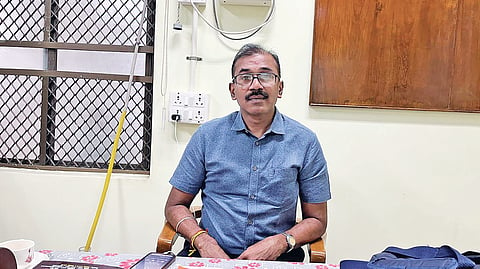
“The patient was living with a ticking time bomb. Excess hormone secretion had pushed him to the brink of a hypertensive crisis and life-threatening cardiac complications. Careful pre-operative preparation was as critical as the surgery itself,” said Dr Dhalapathy Sadacharan, HoD, Endocrine Surgery, RGGGH.
The procedure brought together experts from endocrine surgery, urology, vascular surgery, surgical gastroenterology, haematology, anaesthesiology and critical care. In a single sitting, surgeons performed bilateral adrenalectomy, removed multiple paragangliomas, carried out a right radical nephrectomy and extracted the tumour thrombus from the renal vein and inferior vena cava.
Histopathological exam subsequently confirmed the diagnosis, while repeat biochemical tests showed hormone levels had normalised. The patient has remained under close observation for the past month and is recovering steadily. He is expected to be discharged within a week.
Dr Sadacharan said, “The disorder is hereditary, making genetic evaluation of first-degree relatives essential. The hospital is coordinating with CMC Vellore to complete genetic testing within the next two weeks. The patient will require lifelong surveillance with annual blood and urine investigations to detect any recurrence at an early stage.”