
- Chennai
- Tamil Nadu
- India
- World
- EntertainmentEntertainment
- Business
- Sports
- Lifestyle
- Technology
- Videos
- Explainers
- Editor's Picks

In 2024, Onemai Foundation, a non-profit organisation working at the intersection of art and technology, in collaboration with the Roja Muthiah Research Library (RMRL), initiated the Tamil Font Studio. The studio has been established as a platform to create and celebrate Tamil typefaces, functioning as an independent Tamil type foundry that bridges the past with the present.
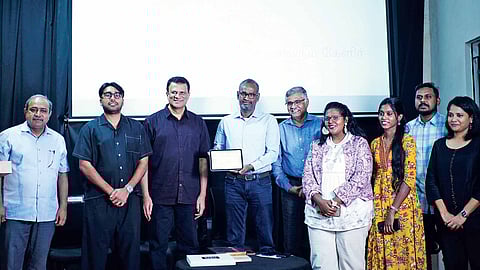
Recently, the studio launched a new font called Korkai. Korkai is an ancient place name mentioned in Tamil literature. Inspired by the shape and functionality of the font, this name has been attributed to it.
Krishnapriya CP, artistic director of Onemai Foundation, notes a growing interest in typography. “Narendran K, the other artistic director, and I studied at the College of Fine Arts in Chennai, where Tamil typography and font-making formed an important part of our training.
However, there is a significant gap in the creation of Tamil fonts. Although Tamil is widely used in digital spaces today, design options remain limited, with very few new typefaces being developed.”
She contrasts this with English typography, which has a vast and continuously evolving range of professionally designed fonts and is recognised as a key design element.
“As a foundation, we felt it was important to treat typography as a serious practice, invest in the process, and initiate a broader conversation around Tamil font-making.”
The idea also aligned with the interests of Onemai Foundation’s founder, Vignesh Sundaresan, who comes from a technology background. “A font is essentially a digital object.
The process of creating it is digital, and the final design is meant for digital use as well. That was where the interest came from. Collaborating with RMRL was crucial, and its Director, Sundar Ganesan, is also deeply interested in font-making," says Krishnapriya.
One of the Tamil Font Studio’s objectives is to research old typefaces from the RMRL archives and create new fonts that are both aesthetically pleasing and functionally adaptable, while feeling fresh.
RMRL holds a significant archive of early Tamil print culture, covering the entire modern print period, along with material from popular culture.
“For a long time, Tamil type-making did not exist as a formal practice. It appeared only in fragments, such as artists collaborating with authors on book covers and so on.
The idea of having a studio where research could be carried out, material studied, and processes documented felt necessary,” she adds.
RMRL holds a significant archive of early Tamil print culture, covering the entire modern print period, along with material from popular culture.
“For a long time, Tamil type-making did not exist as a formal practice. It appeared only in fragments, such as artists collaborating with authors on book covers and so on.
The idea of having a studio where research could be carried out, material studied, and processes documented felt necessary,” she adds.