
- Chennai
- Tamil Nadu
- India
- World
- EntertainmentEntertainment
- Business
- Sports
- Lifestyle
- Technology
- Videos
- Explainers
- Editor's Picks

CHENNAI: A report documenting Chennai’s century-old trees was released on Tuesday, identifying 57 heritage trees across 27 species, with several estimated to be more than 200 years old.
Titled ‘Hundred Year Old Trees of Chennai: A Living Legacy of Tamil Nadu’, the report highlights the city’s natural heritage and the ecological importance of preserving its oldest trees.
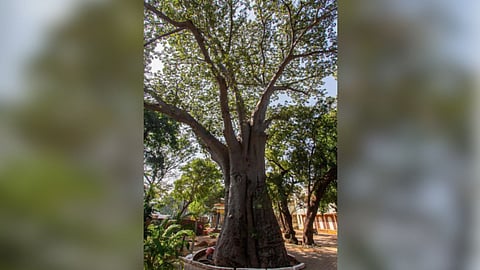
According to the findings, 24 of the documented trees are over 200 years old, while the remaining 33 are estimated to be between 100 and 200 years old. The oldest tree recorded in the study is a Baobab (Adansonia digitata), believed to be between 239 and 292 years old, sits in Andhra Mahila Sabha on Greenways Road, Adyar. Another Baobab also holds the record for the largest girth among the documented trees, measuring about 1,070 cm. Meanwhile, the tallest tree identified is a Terminalia arjuna, which stands around 41.6 metres tall (equal to 12-floor building), sits in MLA hostel ground.
The report also notes that 45 of the 57 trees have girths exceeding 200 cm, reflecting their exceptional maturity and ecological significance. Many have survived decades of urban expansion and continue to play a crucial role in maintaining the city’s biodiversity and environmental balance.
The documentation was done under the Green Tamil Nadu Mission in collaboration with Nizhal Trust, Institute of Wood Science and Technology (IWST), and Institute of Forest Genetics and Tree Breeding (IFGTB). Researchers conducted extensive field surveys to identify, document and study the heritage trees across the city.
Scientists also used Electrical Resistance Tomography (ERT), an advanced non-destructive diagnostic technique, to assess the internal health and structural stability of the trees. The technology helps detect hidden decay within the trunk and provides insights that can guide conservation and long-term protection efforts.
Apart from their ecological value, the report also highlights the cultural significance of several species in the study. Some are mentioned in classical Tamil literature, including Sangam texts, reflecting their presence in the region’s cultural and historical landscape.
The findings underscore the importance of safeguarding these living monuments, which have stood through centuries of change and continue to form an integral part of Chennai's urban ecosystem.