
- Chennai
- Tamil Nadu
- India
- World
- EntertainmentEntertainment
- Business
- Sports
- Lifestyle
- Technology
- Videos
- Explainers
- Editor's Picks

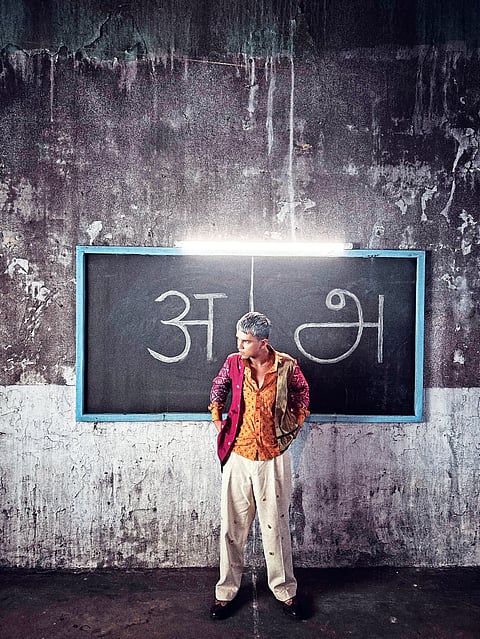
CHENNAI: All of 19, rapper Ritual’s new bilingual song music video, Thakka Thai, produced by Cheers Music, is set in a fictional village in Tamil Nadu where north and south Indians live in harmony. They share food, culture and even families. This harmony is disrupted by a feudal lord, played by actor Nizhalgal Ravi. As the song progresses, the people chase the lord out to live together again.
“I am a south-bred, from the north,” goes one of the verses of Ritual’s Hindi-Tamil rap, as he narrates how cultural differences do not change the love between people. “At 4 am, I eat rotis with vendakkai sambar,” goes another line.
Born in Bihar and raised in Chengalpet, about an hour and a half from Chennai, Ritual, now in his first year of undergraduate studies at a city college, is one among many who embraced the city as home after moving here for financial reasons.
The rapper dabbled in poetry and bhajans in school before finding his voice in rap. “It was Honey Singh who made me discover rap. Initially, I had assumed rap was just a filler in songs. As I listened more, I realised it is a form of storytelling. As an introverted person, this felt like something I could try.”
While he started rapping in Hindi, his friends encouraged him to try Tamil as well. “They told me that if I did it in Tamil, they could understand and vibe with the song.”
A stint in a rap battle conducted by Motta Maadi Moshpit, a Chennai-based rap collective, in 2024 introduced him to the music industry and the rap scene. Later that year, he began streaming his work online.
Initially, his songs were either in Hindi or Tamil. “I wanted to blend both languages into a song, even if it reached a limited audience. That is how Thakka Thai was born,” he says. The bilingual track, along with some English verses, has clocked over 239K views on YouTube.
The idea, at its inception, was simply to use both Hindi and Tamil in one song. “It was my director, Silvan, who pushed me to explore my multicultural identity. With the increasing divide between the north and south, we wanted to promote unity through this song,” he says.
The track fuses the Indian banjo, primarily used in northern India, with Tamil folk elements like the parai to reinforce this vision. “As I sing in my song, the rhythms of the words may be different, but they are united by their meaning,” he adds, referring to his multilingual introduction.
Choosing which language fits where depends on musicality and meaning. “The thought comes first and the language later. I try expressing the same thought in both languages before finalising the best version,” he explains.
Venturing into different forms of music is his next goal, but his rap will continue to focus on his migrant identity. “I want to tell the world the story of people like us, who leave our motherlands for livelihood. When we moved here, there was resentment back home in Bihar, and it was equally difficult to adapt here. This song only scratches the surface of that experience,” he says.
Reflecting on his journey, he says that despite instances of discrimination, he is grateful for the city and its people. “Even though I did not know the language, the place connected with my soul. Slowly, I picked up the culture and language,” he says with a smile.
He continues to work in Tamil as a gesture of gratitude and love for the culture. Through his rap, he hopes to bring attention to untold stories. “My name, Ritual, comes from that idea. Like rituals that connect people in a larger sense, I want to be a connection to art,” he concludes.