
- Chennai
- Tamil Nadu
- India
- World
- EntertainmentEntertainment
- Business
- Sports
- Lifestyle
- Technology
- Videos
- Explainers
- Editor's Picks

CHENNAI: Former Orissa High Court Chief Justice S Muralidhar said on Saturday that executive control over judicial appointments has tightened since May 2014, with the Union government exercising greater influence over the collegium system despite the Supreme Court striking down the National Judicial Appointments Commission (NJAC).
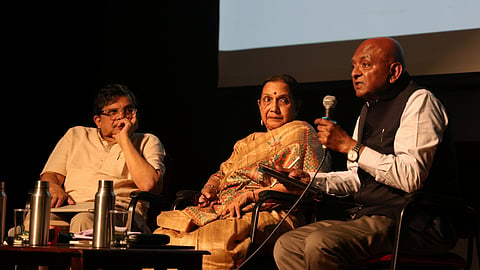
The colloquium featured a presentation of the book Who Will Judge the Judges, authored by former Madras High Court judge K Chandru, who criticised the collegium system, saying nowhere in the world do judges appoint themselves. He alleged that the present Union government has successfully bypassed it, effectively allowing PM Modi to appoint judges to the Supreme Court and the High Courts.
Speaking at the Asian College of Journalism’s colloquium, former Justice S Muralidhar cited the delayed appointment of Justice KM Joseph to the Supreme Court in 2018 as an example of how the government could influence appointments without tampering with the constitutional framework.
Justice Joseph, then Chief Justice of the Uttarakhand High Court, and senior advocate Indu Malhotra were recommended for appointment in the same collegium resolution on January 10, 2018. While Justice Indu Malhotra’s appointment was cleared, Justice Joseph’s name was held back for months. “The myth that judges appoint judges has been broken,” Justice Muralidhar said.
He traced the shift to 2014, when the collegium rejected its recommendation of senior advocate Gopal Subramanium for appointment to the Supreme Court. Delays in appointments continued in 2014 and 2015 as the court examined the constitutional validity of the 99th Constitutional Amendment, which sought to replace the collegium with the NJAC.
The Supreme Court struck down the NJAC in 2015 by a 4:1 majority, ruling that it violated judicial independence. The proposed six-member commission allowed any two members to veto an appointment, potentially sidelining both the Chief Justice of India (CJI) and the President, Justice Muralidhar said.
“What the government did was it simply took control of the entire process, thus achieving more than what NJAC may have delivered to it,” he said.
Tracing the evolution of judicial appointments, Justice Muralidhar said the debate over executive involvement dates back to the Constitution's framing. While several committees in the 1940s favoured excluding the executive or requiring the CJI’s concurrence, BR Ambedkar opposed giving the CJI an effective veto, citing judges’ own failings, sentiments and prejudices.
Justice Muralidhar said controversies involving successive CJIs had further weakened the collegium. He also flagged the concentration of administrative powers in the CJI’s office, particularly the authority to decide which judges hear cases, known as the master of the roster.
The executive’s growing influence over appointments, alongside the CJI’s administrative authority, raised concerns about the checks and balances needed to protect judicial independence.
Sashi Kumar, chairman of the Media Development Foundation and the Asian College of Journalism, delivered the welcome address at the colloquium.