
- Chennai
- Tamil Nadu
- India
- World
- EntertainmentEntertainment
- Business
- Sports
- Lifestyle
- Technology
- Videos
- Explainers
- Editor's Picks

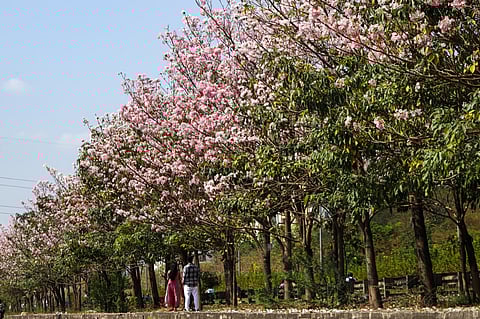
CHENNAI: The sudden bloom of pink trumpet trees across the city has added an unusual pastel hue to Chennai’s otherwise summer-yellow landscape, drawing attention from residents and social media users alike.
From Adyar and Greenways Road to Anna Nagar and Thousand Lights, clusters of the trees have been turning heads, with many stopping to photograph the blossoms and share them online. While copper pod trees usually dominate the city’s avenues in April, this year the pink blooms have stood out.
For many, the sight has been both surprising and nostalgic. Residents say the flowers have brought a fresh visual break from the usual summer palette, with some noting that the trees may have matured enough in recent years to flower more prominently now.
Climate link to blooming patterns
The trees in bloom are likely Tabebuia rosea, commonly known as pink trumpet trees, which typically flower during the summer transition. However, the scale and intensity of blooming this year have sparked discussion online.
A Chennai-based weather tracker (Parthan IN Weather on X) linked the bloom to “stress bloom”, where trees flower more intensely during extreme heat or dry spells to ensure survival.
He said rising temperatures and Chennai’s urban heat island effect, driven by increased concrete cover, shrinking water bodies and rising vehicular traffic, act like an “artificial spring”, triggering stronger or prolonged flowering. "While the blossoming itself is a natural summer event, the intensity and timing you're witnessing are definitely being nudged by the broader changes in our environment," his tweet said.
Non-native trees raise concern
Botanists note that Tabebuia rosea is not native to the region and may not be ideally suited to Chennai’s coastal conditions. Originally a rainforest species, it can be vulnerable during cyclones and extreme weather.
Environmentalists caution that while such ornamental trees add aesthetic value, large-scale planting could affect native biodiversity. Indigenous species such as pungam, poovarasu, vengai and Indian laburnum are better adapted to local conditions, offering better ecological benefits in the long run, they added.