
- Chennai
- Tamil Nadu
- India
- World
- EntertainmentEntertainment
- Business
- Sports
- Lifestyle
- Technology
- Videos
- Explainers
- Editor's Picks

CHENNAI: Long before the speeches began, the foyer of Valluvar Kottam auditorium was already buzzing. Students clutched registration slips, scanned lists for their names and queued patiently to collect the textbooks that would accompany them through another academic year. For many, the books were more than study material, they were a chance to continue their education without adding to their family’s financial burden.
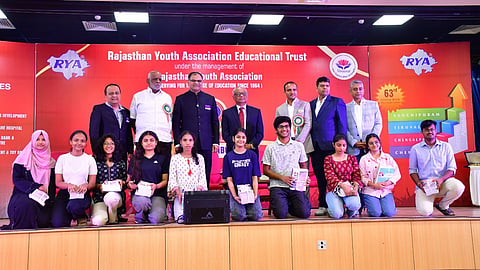
That sense of purpose defined the Rajasthan Youth Association’s (RYA) 63rd Annual Book Distribution Function on Sunday, as the organisation welcomed thousands of beneficiaries into one of the country’s longest-running textbook lending initiatives.
“The Book Bank Project has always been guided by a simple objective – to ensure that no deserving student is deprived of education because of the cost of textbooks,” said Vivek Bomb, president of RYA.
Unlike a conventional book donation drive, the RYA Book Bank functions on a sustainable lending model. Students receive the textbooks required for each semester, return them after examinations and collect the next set for the following term, allowing every book to benefit multiple learners over the years. The initiative now issues more than 35,000 books annually to nearly 9,000 students pursuing arts, science, commerce and engineering courses, irrespective of caste, creed or religion.
Calling education “one of the most valuable investments in the future”, GL Gnanatheva, Minister of Commerce, Deputy High Commission of Sri Lanka in Chennai, said, “Initiatives such as the RYA Book Bank ensure that financial constraints do not stand in the way of learning.”
Guests of honour Ashok Kumar Mundhra, secretary, DG Vaishnav College, and entrepreneur Rajesh Surana also lauded the initiative, noting that its greatest success was not in the number of books distributed but in the lives transformed through education.
As students walked away carrying neatly packed bundles of textbooks, they were also carrying forward a tradition started by 29 college friends in 1963 – a simple idea that 60 years later, continues to prove that when knowledge is shared, opportunity multiplies.