
Chennai
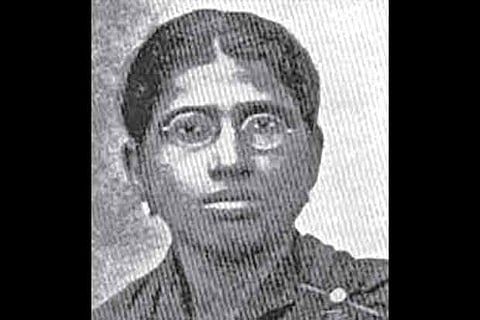
Talking to DT Next, Devika said that Muthulakshmi’s life and contribution haven’t been discussed in detail. She said, “Her mother was from the community, while her father as a brahmin. She became the first woman student of the Maharajah College in Pudukkottai and was the first woman surgeon to graduate from the Madras Medical College. Later, she went on to establish the Cancer Institute.”
Devika pointed out that that Muthulakshmi fought for various issues, ranging from raising of the marriageable age of women, property rights of women, abolition of wet nursing among upper class women who hired Dalit women for breast feeding their children and abolition of dedication of young girls as devadasis. The men used them as concubines and their children had no name or inheritance, said Devika.
She added, “Although the law was passed in November 1947 by the Madras Presidency, the first application for the abolition came much before. If not for her, the case would have frittered away.”
Devika added that the divorce of the art form of sathir from the practice of devadasi system was crucial. “The sathir was attached to the dedication of young girls. Men could have their own families and have children from these women and have no responsibility towards them. It had to be divorced from the practice and had to be available for others. Rukmini Devi Arundale who worked on taking the art form to an audience had to begin somewhere. She learnt this form, but her milieu was different. You can call it appropriation or creative regeneration. Appropriation is a very fashionable word nowadays.”
The discussion will be held at Shreyas, 17/9, 2nd Cross street, Customs Colony, Besant Nagar, on May 26.
Visit news.dtnext.in to explore our interactive epaper!
Download the DT Next app for more exciting features!
Click here for iOS
Click here for Android