
- Chennai
- Tamil Nadu
- India
- World
- EntertainmentEntertainment
- Business
- Sports
- Lifestyle
- Technology
- Videos
- Explainers
- Editor's Picks

COIMBATORE: Far from their native homes but firmly rooted in Tirupur, migrant workers are set to play a defining role in shaping the electoral future of this textile hub in the assembly polls.
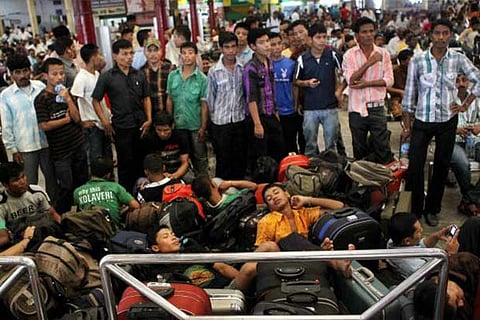
Thousands of workers from Bihar, Uttar Pradesh, and Jharkhand have made Tirupur their home and are now part of the electorate. Their growing presence is particularly significant in Tirupur North and South constituencies.
According to AITUC Banian Factory Labour Union general secretary N. Sekar, Tirupur North alone has around 20,000 migrant voters, while Tirupur South has approximately 16,000. “Their preference for a political party varies between Lok Sabha and Assembly elections,” Sekar noted, adding that one of their primary concerns is improving train connectivity to their native states.
Recognizing their electoral significance, political parties, both regional and national, had their campaigns strategize in Hindi to connect more effectively with the migrant workforce. A DMK functionary involved in supervising such a Hindi outreach campaign among the migrants said, “We are highlighting welfare measures, especially free bus travel for women, which resonates strongly among migrant families.”
At the fag end of the campaign, several Union ministers also visited Tirupur to interact directly with migrant workers. During one such visit, Union Minister for Law and Justice Arjun Ram Meghwal even sang devotional songs in Hindi while canvassing for support. Workers used the opportunity to submit petitions demanding more train services to northern states.
However, beneath the heightened political activity lies a deepening economic distress. Over the past month, many migrant workers have faced job losses due to a slowdown in the textile sector, exacerbated by global factors such as the Iran-Israel conflict. A shortage of LPG, essential for certain textile processes like t-shirt printing, has further disrupted operations.
The fallout has been significant. “Thousands have already left Tirupur due to lack of work,” said G Pradhan Kumar, a 38-year-old supervisor in textile business from Bihar. “Out of the 60 workers I employed, only 10 remain now. Rising prices of essential goods and stagnant wages are making survival difficult,” he said.
Keenly awaiting to exercise his franchise in Tirupur on Thursday, Kumar’s journey reflects the aspirations of many migrants, arriving as a helper two decades ago, he worked his way up to become a tailor and now a supervisor, by employing many. Yet today, even established workers like him are grappling with uncertainty. Among their key demands is a reduction in property tax, which they say has increased sharply and added to their financial burden.
As Tirupur heads to the polls, these migrant workers could well influence the outcome in this industrial heartland.