
Chennai
By car, it was an hour’s journey, but by walk, it seemed like the road to eternity. I would have sacrificed my adventurous spirit, had it not been for my three friends, Ramesh, Lata and AJ Singh. AJ was from the Army, and hence used to these long treks and heat, but for the rest of us, it was a sheer test of mind over body, and a Pongal toalways remember.
After four gruelling hours, when we reached the outskirts of the village, we were struck by the most gorgeous parts of Tamil Nadu that I had ever seen — the kind that can put even the most highlighted and far out places of natural beauty to shame. Stunning vistas, full of picture-postcard-like countryside with gorgeous green fields were all around us. Tiny villages nestled against the backdrop of blue hills. These cluster villages gave off a charm that was unique. As our weary bodies and tired feet trudged the last few yards, we were welcomed by an old man and a middle-aged lady working on the potter’s wheel in front of their hut. The lady Muniyamma was drying the pots prepared by the old man. His son, Ganesh, along with Muniyamma’s husband, was busy at the back of the hut plucking vegetables and coconuts for their kaanum Pongal lunch. They welcomed us heartily and being Pongal, invited us to share their food after washing up, drinking coconut water and taking a short tour around the village. We were escorted by the smart Chandru, their 12-year-old son, whose sharp observations and commentary made for interesting anecdotes.
A calm and scenic place consisting of 17 villages, Padavedu is encircled by the Jawadhu Hills, rivers and other water bodies. Paddy fields and coconut trees complement its beauty, giving the warmth of green in every sight. The village of Keshav Puram was where we saw interesting sites dating back to the 11th and 12th centuries. These villages had been part of the flourishing kingdoms of the Chola, Vijayanagara and Sangam periods. The region of Padavedu, under the rule of Kempegowda, had been one of the largest and wealthiest places in India. It was also a place of spiritual significance, drawing many sages from across the country to find salvation here.
Food played an important part not only during festivals, but also during rituals. The ritual of cooking pongal in a mud pot was common in most places of Tamil Nadu, but here, certain vegetables were a must on the special day. One of them was the earthy brinjal or kathirikai, which occupied a prominent place in the culinary items. From India, the vegetable travelled to many other parts of the world.
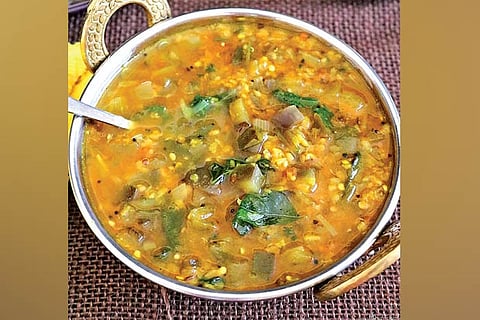
We sat down inside the hut on cow dung hardened floors, with mats spread across to sit on. The roofs made of thatched coconut palm leaves, which were knitted together and are called kith. We were served lunch on the mandara ella or leaf plates used during the festivals. The old man, his son Ganesh, and Chandru joined us as we were served by the lady of the house. There was the traditional ven pongal, sakkarai pongal, cooked tapioca and the most delectable kathirikai gothsu to go with the pongal. The dish was made with vegetables grown in their backyard, mainly brinjals and some local tomatoes, ginger and shallots.
The tangy, hot and slightly sweet dish was the perfect crown to the food cooked. All the food was cooked in mud pots on woodfire and the taste was divine, making it an experience of a lifetime. Everyone shouldexperience it and the second best thing would be to make kathirikai gothsu at home and have it as a side dish toalmost anything.
— is the author of ‘Festive Offerings to the Gods: Divine Soul Recipes’
INGREDIENTS
Brinjal: 270 gm | Sesame oil: 4 tbsp | Chana dal: 2 tbsp | Coriander seeds: 1 tbsp | Dried red chillies: 5 | Cumin seeds: 1 tsp | Sesame seeds (white or black): 1 tsp | Groundnuts: 1 tsp | Asafoetida: 1tsp | Tamarind: a small marble sized amount | Ginger: 1 tsp grated | Turmeric powder: ½ tsp | Jaggery: 1 tsp | Mustard seeds: ¼ tsp | Shallots: 15 finely chopped | Salt: to taste | Tomatoes: 2 finely chopped | Coriander leaves: 1 tbsp finely chopped | Curry leaves: 1 tbsp
METHOD
Visit news.dtnext.in to explore our interactive epaper!
Download the DT Next app for more exciting features!
Click here for iOS
Click here for Android