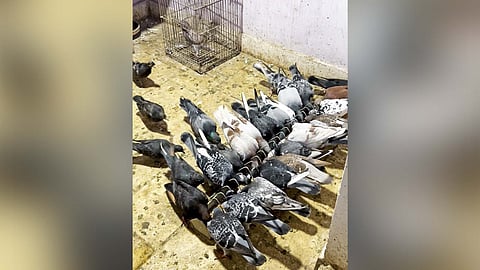

CHENNAI: Recently, the Karnataka government issued an order banning the feeding of pigeons in public places in Bengaluru city. This decision was taken due to the rise in various respiratory diseases caused by pigeon droppings, according to health officials.
In Tamil Nadu, keeping pigeons at home is still a common practice. In metropolitan cities like Chennai, pigeons are frequently seen nesting and residing in large apartment complexes and office buildings. Pigeons generally live in groups, and their droppings are now identified as a health hazard to humans.
Doctors warn that people who clean pigeon droppings daily are at risk of developing lung infections such as pneumonia. Specifically, bacteria like psittacosis and chlamydia present in pigeon droppings can enter the lungs through the nasal passages and cause pneumonitis.
When particles from pigeon droppings enter the lungs through the nose, they trigger the body's immune response. During this process, antibodies in the lungs fight the antigens carried by the germs from the droppings, which can result in lung inflammation. If this condition is not diagnosed in its early stages, it can progress from lung inflammation to Interstitial Lung Disease (ILD), which is an irreversible lung condition.
People affected by this disease may develop severe oxygen deficiency and may reach a stage where ventilator support becomes necessary. According to pulmonary specialists, the only treatment option at this advanced stage is lung transplantation, which is not easily accessible or affordable for people from all sections of society.
Although raising pigeons in itself does not directly cause harm, cleaning pigeon droppings without protective equipment, such as face masks, significantly increases the risk of infection. Pulmonologist Dr Sabarinath emphasises that individuals who clean pigeon droppings must exercise extreme caution and use proper safety measures.
For the past 15 years, Amarchandh has fed pigeons daily at Chennai's Marina Beach. He stated that feeding is done only on the sandy beach area and nowhere else. As the beach is a vast open space, he believes the health risk is minimal.
Speaking to DT Next, animal welfare activist Anthony Rubin said that humans tend to exaggerate even small, manageable issues. He pointed out that pigeons have coexisted with humans in society for many years, and suddenly treating them as a problem and seeking to remove them is not the right approach. Instead, he suggests preventive measures such as installing nets to prevent pigeons from entering homes and maintaining cleanliness in areas where pigeons are present. These steps, he believes, can help people protect themselves from disease risks.