
- Chennai
- Tamil Nadu
- India
- World
- EntertainmentEntertainment
- Business
- Sports
- Lifestyle
- Technology
- Videos
- Explainers
- Editor's Picks

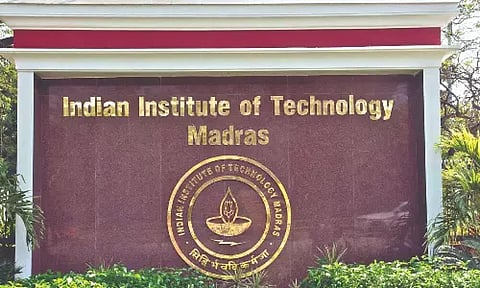
CHENNAI: Indus Towers Limited, one of the largest telecom tower companies, has partnered with the Indian Institute of Technology Madras (IIT-M) to research Glass Fibre Reinforced Polymer (GFRP) structural sections. The initiative, the first of its kind in the sector, will study the structural, economic and environmental benefits of GFRP applications.
The collaboration forms part of Indus Towers' Corporate Social Responsibility programme Pragati, which supports sustainable innovation. Under the partnership, IIT-M will research developing lightweight, corrosion-resistant and durable alternatives to conventional steel structures.
Anil Gupta, Chief Technology and Delivery Officer, Indus Towers, said the collaboration would help redefine material science for industries working with GFRP. "GFRP provides an opportunity to develop solutions that are structurally sound, cost-efficient and aligned with sustainability goals, " he said.
GFRP has been identified globally as a next-generation material due to its strength-to-weight ratio, corrosion resistance and low maintenance. Its ease of design, transport and installation, and potential for reuse, make it suitable for infrastructure in varied environments.
According to IIT Madras, it will study the mechanical performance, durability and lifecycle of GFRP to help establish design and safety standards for its applications in telecom and other sectors.
Prof. Ravindra Gettu, Professor-in-charge at IIT-M, said the funding would allow the institute to examine the structural potential of GFRP for telecommunication towers, scaffolding, staircases, ladders, roofing and framing systems.
Prof. Ashwin Mahalingam, Dean (Alumni and Corporate Relations), said the collaboration highlighted the role of industry-academia partnerships in taking research from the laboratory to practical, scalable solutions with social and economic relevance.