
- Chennai
- Tamil Nadu
- India
- World
- EntertainmentEntertainment
- Business
- Sports
- Lifestyle
- Technology
- Videos
- Explainers
- Editor's Picks

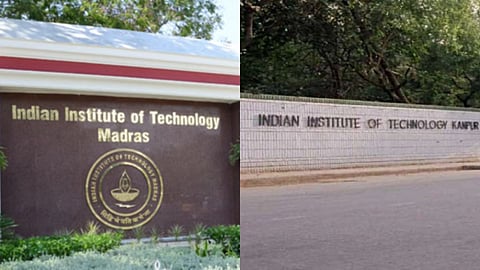
CHENNAI: The Indian Institute of Technology Madras (IIT Madras) and the Indian Institute of Technology Kanpur (IIT Kanpur) have launched the country’s first four-year Bachelor of Cybersecurity (B Cyber) programme, with admissions beginning this month, as the two institutions seek to address the country’s growing demand for trained cybersecurity professionals.
IIT-M’s director V Kamakoti said that cybersecurity had become central to India’s technological sovereignty and national security, requiring professionals with both academic knowledge and operational skills.
“By joining IIT Kanpur in launching this programme, IIT-M is contributing to a new model of undergraduate education that integrates academic learning with real-world practice. This initiative will create a pipeline of cybersecurity professionals who will play a vital role in securing the nation's digital future,” he added.
According to the institutes, India faces a shortage of nearly 1.5 million cybersecurity professionals as digital infrastructure expands across governance, finance, healthcare, transportation, telecommunications, manufacturing and defence.
The programme combines classroom learning with practical training to prepare students for roles in cyber defence, security operations, penetration testing, vulnerability assessment, digital forensics, malware analysis, cloud security, hardware security and the protection of critical infrastructure. It also provides a pathway for higher studies and research in cybersecurity and computer science.
A key component of the programme is a two-year Field Deployment Professional Project, under which students will spend their final four semesters working on live cybersecurity assignments under the guidance of professionals from strategic organisations. The curriculum covers security operations, vulnerability assessment and penetration testing, secure systems, malware analysis, firmware reverse engineering, hardware security, cloud security and critical infrastructure security.
Students can also choose electives in digital forensics, embedded systems security, secure processor microarchitecture and applied cryptography, while the first two years focus on laboratory-based training in programming, Linux administration, cryptography, operating systems, computer networks, ethical hacking and web security.