
- Chennai
- Tamil Nadu
- India
- World
- EntertainmentEntertainment
- Business
- Sports
- Lifestyle
- Technology
- Videos
- Explainers
- Editor's Picks

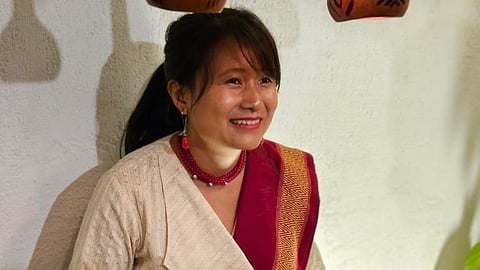
CHENNAI: For Nambie Jessica Marak, cooking has never been only about what ends up on a plate. Growing up in Upper Rangsa in Meghalaya, the food she knew at home eventually became a way of introducing people to a region, its ingredients and the stories behind them. Her journey took her from documenting Northeast Indian recipes online to the MasterChef India kitchen, where she emerged as the first runner-up and now to MasterChef Asia, where she will represent India.
Nambie, popularly known as The Tribal Chef and recognised as a Culinary and Cultural Ambassador of Meghalaya, will bring her interpretation of Northeast Indian cuisine to Chennai this week through a three-day collaboration at Colony, Raintree St. Mary’s.
But her relationship with food began much before the television kitchen. “I love cooking and realised that the food I grew up eating was also a beautiful way of telling people where I come from. The more I cooked, the more I wanted people to know the stories behind these ingredients and dishes,” says Nambie.
Chennai also became an unexpected chapter in that journey. Nambie came to the city for her Master’s and spent more than eight years here. Being away from Meghalaya, she says, made her look at her own food differently.
“Living in Chennai gave me a completely different perspective on my food. Being away from home made me appreciate the ingredients and flavours I had grown up with much more. At the same time, Tamil food and my husband’s family introduced me to a new way of cooking, especially the importance of spices, tempering and layering flavours. I think both cuisines have naturally become part of how I cook today,” she says.
It was during her time in Chennai that she began Eat Your Kappa, a platform through which she documented recipes from the Northeast. The motivation was simple: she wanted to find and share the food she had grown up eating.
“I wanted to share the food I grew up eating because I couldn’t find much about it online. Only later did I realise that these recipes were becoming a small record of a food culture that many people had never encountered before,” she says.
That documentation eventually found a much larger audience on MasterChef India. Working with ingredients and flavours that may have been unfamiliar to viewers outside the Northeast, Nambie says she never felt she had to represent an entire region with every plate.
“I was doing what I love. I never thought I had to represent an entire region with every plate. I simply wanted to cook my food in a way that felt true to me. I was open to adapting techniques and presentation, but the flavours and ingredients that made the food distinctly mine were something I wanted to hold on to,” she says.
Her MasterChef journey also changed the way she viewed herself as a cook. “I think I’ve become much more confident in my own voice as a cook. MasterChef India taught me to trust my instincts and not be afraid of who I am as a cook. Today, I’m much more comfortable putting my food out there and letting people experience it in my own way,” she says.
Yet for Nambie, taking Northeast food to a wider audience is not about presenting a single idea of what the region’s cuisine is. “I would want them to understand that Northeast Indian food is incredibly diverse. There isn’t one single definition of what the food of the Northeast is. Every community has its own ingredients, techniques and flavours,” she says.
Some of those memories are attached to the Chennai menu. “For me, the black rice kheer and the dishes using black sesame feel personal because these are ingredients and flavours I grew up with,” she says.
The collaboration’s menu includes raw jackfruit and black sesame, mustard greens stir-fry, bamboo shoot pickle, black sesame ice cream and black rice fritters on the vegetarian spread. The non-vegetarian menu features Garo-style chicken pepper fry, chicken and black sesame, shrimp kapa, and fish and pumpkin gravy.
Among the dishes, the chicken kapa remains particularly close to home for her. “I’ve kept it very close to how I know it from home — simple, comforting and driven by the ingredients rather than complicated techniques. That simplicity is actually what I love most about the food I grew up eating,” she says.
For Nambie, however, preserving food traditions also means remembering the people behind them. “Food doesn’t exist in isolation — there are farmers, home cooks, communities and generations of people behind every ingredient and tradition. If people become interested in Northeast food, I hope that interest also creates opportunities for the people who have kept these traditions alive,” she says. The three-day culinary collaboration will be held from September 18-20 at Colony, Raintree St. Mary’s.