
- Chennai
- Tamil Nadu
- India
- World
- EntertainmentEntertainment
- Business
- Sports
- Lifestyle
- Technology
- Videos
- Explainers
- Editor's Picks

CHENNAI: Chennai has lost more than half of its green cover in the past decade while its built-up area has nearly doubled, accelerating the formation of urban heat hotspots and underscoring the environmental cost of rapid urbanisation, according to a new study published in the peer-reviewed journal Scientific Reports.
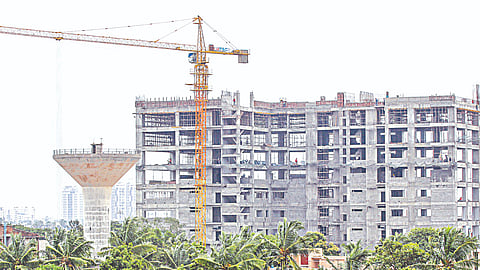
The study, carried out by researchers from the National Institute of Technology (NIT) Calicut, analysed Chennai’s changing landscape and Surface Urban Heat Island (SUHI) patterns between 2014 and 2024 using Landsat and Sentinel satellite imagery. It found that the city’s built-up area increased from 36% in 2014 to 67% in 2024, while vegetation cover shrank from 25% to just 10% during the same period, highlighting a dramatic shift in land use across the metropolitan region.
The changing urban landscape has strengthened the link between concrete development and rising surface temperatures. Researchers found a strong and steadily increasing correlation between built-up density and urban heat, with densely developed neighbourhoods consistently recording higher land surface temperatures than areas with greater vegetation cover.
Although the city’s average Surface Urban Heat Island intensity remained broadly stable over the decade, the analysis revealed that high-temperature hotspots have become more widespread and spatially concentrated. The findings suggest that while Chennai’s overall heat profile has not changed significantly, residents in several neighbourhoods are increasingly exposed to localised heat stress.
The researchers observed that existing green spaces are no longer sufficient to offset the warming effects of rapid urban expansion. Vegetation continued to provide a cooling influence, but its impact remained relatively weak because the city’s green cover has become increasingly fragmented and disconnected.
“The results reveal a significant increase in built-up areas from 36% in 2014 to 67% in 2024, accompanied by a decline in vegetation cover from 25% to 10%,” the authors said, adding that the findings reflect the profound transformation of Chennai’s urban landscape over the last decade.
The study noted that the conversion of open and vegetated land into impervious surfaces has emerged as the principal driver of Chennai’s changing thermal environment. It called for climate-responsive urban planning that integrates interconnected green infrastructure, protects ecological buffers and preserves urban vegetation to reduce future heat risks.
“These findings provide a refined understanding of urban heat dynamics,” the researchers said, stressing that future urban development must strike a balance between infrastructure growth and environmental resilience if Chennai is to remain sustainable in the face of rising temperatures.