
- Chennai
- Tamil Nadu
- India
- World
- EntertainmentEntertainment
- Business
- Sports
- Lifestyle
- Technology
- Videos
- Explainers
- Editor's Picks

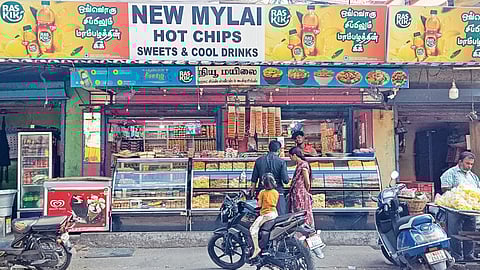
CHENNAI: The spike in commercial LPG cylinder prices in the black market, now reportedly close to Rs 5,000, has triggered a sharp increase in the cost of snacks sold by street vendors across the city, with prices rising by Rs 60 to Rs 100 per kg.
Vendors say the restrictions on commercial LPG supply, coupled with rising palm oil prices, have significantly pushed up input costs, leaving them with little choice but to pass on the burden to consumers.
Savoury items such as potato chips, plantain chips, tapioca chips, onion pakoda, omapodi and kara boondi mixture have all seen price hikes. A vendor on Paper Mills Road in Perambur said he had increased prices by Rs 100 per kg. "We are forced to buy LPG cylinders in the black market for Rs 4,500 against the official price of Rs 2,040. Palm oil prices have also gone up by Rs 150 per 15-litre tin," he said.
Chips that were sold at Rs 40 per 100 grams are now priced at Rs 50, while chips continue to be sold at Rs 50 per 100 grams.
Shop owners say the situation is worsening by the day. A trader in Chintadripet said the cost of cylinders was fluctuating sharply due to shortages. "While public sector oil companies fixed the price at around Rs 2,000, private suppliers are hiking rates daily. It has now touched Rs 5,000," he said, adding that he had increased prices from Rs 300 to Rs 360 per kg to break even.
In Triplicane, vendors complained of erratic supply. "Even after booking, cylinders are not delivered on time, sometimes taking several days. This affects production and sales. With rising costs of oil, gas and raw materials, we are forced to increase prices. Footfall has also come down," a shop owner said.
The impact is also visible at tea stalls, where prices of popular snacks have been revised. Bajji and bonda varieties now cost Rs 12, up from Rs 10, samosas have gone up from Rs 12 to Rs 15, and vada is now priced at Rs 6, up from Rs 5.
Consumers, especially daily wage earners and middle-class families, say the rising prices of everyday snacks are straining their budgets. While some vendors have turned to firewood as an alternative to cut costs, many say it is not a feasible option for all.