
- Chennai
- Tamil Nadu
- India
- World
- EntertainmentEntertainment
- Business
- Sports
- Lifestyle
- Technology
- Videos
- Explainers
- Editor's Picks
CHENNAI: As Margazhi once again transforms Chennai into a living archive of rhythm, devotion and artistic exchange, Aalaap’s The Diaspora Dance Festival (TDDF) returns for its third edition with an expanded vision and deeper global imprint. Conceived as a distinctive platform for Indian classical exponents of the diaspora, TDDF foregrounds voices that carry tradition across borders, allowing form, memory and contemporary lived experience to intersect meaningfully.
Anchoring the narrative are a Mohiniyattam artiste and a Kuchipudi exponent whose journeys have been shaped by migration, cultural negotiation and artistic perseverance. Returning to Chennai during Margazhi, they reflect on sustaining classical practice in distant geographies, reinterpreting inherited vocabularies through global sensibilities, and the emotional significance of performing for home audiences. Their presentations promise nuanced storytelling, technical rigour and a quiet assertion
This year, the festival unfolds over two immersive days, December 30 and 31, at Medai – The Stage, featuring artistes from across the world trained in Bharatanatyam, Odissi, Mohiniyattam and Kuchipudi.
‘Kuchipudi’s theatricality is not bound to familiarity but to sincerity’
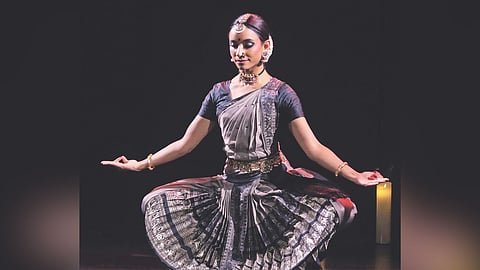
Her artistic journey began early in Hyderabad, within a traditional gurukul-style training in Kuchipudi. Yamini Kalluri grew up immersed in the discipline, rigour and spiritual grounding of the form, learning not only movement, but also Telugu literature, music, nattuvangam and the deeper philosophy of natya. “A major shift occurred when I moved to the United States. Training in ballet and modern dance, particularly through institutions like the Martha Graham School, expanded my physical awareness, anatomical understanding and compositional thinking. Rather than pulling me away from Kuchipudi, these experiences deepened my connection to it. Over time, my work evolved into a dialogue between worlds: tradition and experimentation, structure and intuition, East and West,” she says.
Training and performing in New York has made her far more conscious and intentional about her classical foundations. “This distance has actually deepened my relationship with natya, vachika and abhinaya. I have had to articulate their logic, dramaturgy and emotional architecture with precision. When I return to Chennai, I feel a heightened clarity as my choices are sharper and my restraint more deliberate. I am more aware of what must remain untouched and what can be questioned without disrespect. Paradoxically, being away has strengthened my roots,” the Kuchipudi exponent adds.
According to Yamini, the essence of Kuchipudi lies in the integrity of movement, rhythm and intention, rather than surface markers or exoticism. “I never dilute the technique, grammar or internal discipline of the form. Instead, I contextualise through framing. I often let the body speak first through rhythm, breath and stillness before narrative explanation. I trust that honesty and precision travel across cultures,” she shares.
One of the biggest challenges, she says, is resisting the urge to over-explain. Mythology and language carry layers that cannot always be translated literally. Over the years, she has learned that emotional truth travels faster than intellectual comprehension. “When intention is clear and the body is fully inhabited, audiences — regardless of cultural background — respond viscerally. They may not know the story of Satyabhama or Krishna, but they understand longing, pride, devotion, jealousy and surrender,” the 27-year-old notes.
Returning to Chennai sharpens Yamini’s accountability to tradition. For her, the ecosystem —teachers, musicians, scholars and audiences — demands rigour and humility. “It reminds me that Kuchipudi is not my personal property, but a living lineage I am in conversation with. At the same time, being shaped by a transnational life means I cannot return unchanged. Chennai becomes a mirror. It forces me to examine what I carry back with me, what I hold on to and what I am ready to let evolve. This tension is productive, and it keeps me honest,” she states.
“I see my role as a bridge-builder,” she says, adding that for the upcoming generation abroad, she hopes to offer depth without dogma — rigorous training that is intellectually, physically and emotionally grounded, while also acknowledging the realities of diaspora life. “Festivals like Margazhi remain vital touchstones. They remind me that global visibility must be matched with cultural responsibility. My vision for Kuchipudi on the global stage is not one of dilution or spectacle, but of quiet authority.”
Ultimately, she hopes to contribute to a future where Kuchipudi is both deeply rooted and expansively imagined.

‘Coming to India feels like an artistic reset’
Parvathi Jayaram moved from the corporate world in Bengaluru to become a full-time dancer. From 2015 to 2023, while holding a full-time corporate job, she spent every weekend training under Vinaya Narayanan in Guru Padmashri Bharati Shivaji’s Mohiniyattam repertoire. In 2023, she took a leap of faith and committed to dance fulltime after moving to Dublin. “Transitioning from the constant energy of a dance school in India to being an independent artiste in Ireland wasn’t easy. Without the physical presence of a teacher or a community of dancers around me, I had to dig deep to find my own motivation. Being away from home has forced me to look at the dance form through a new lens,” she says.
The 32-year-old began exploring how Mohiniyattam intersects with theatre and contemporary music. Preparing for the Margazhi season in Chennai is a very different experience from performing for international audiences in Dublin. “In Ireland, I often find myself in the role of an educator, where my focus is on introducing the basics of the dance form and building a bridge through universal themes. Back home, however, audiences are incredibly knowledgeable. Mentally and technically, this forces me to be much more precise with my lineage. It’s a rewarding challenge that keeps me connected to the spiritual roots of the form, even while I live and practise largely on my own in Ireland,” she adds.
An art form travels far and wide through innovation, yet remains rooted in tradition. “Evolution happens naturally because I am creating work in a very different environment. Instead of simply repeating what I’ve learned, I look for ways to make the dance relate to my life here. I don’t see this as losing tradition, but as allowing the dance to grow and find new ways to speak to people in a different part of the world.”
Because Mohiniyattam relies on lasyam and quiet, inward expression, Western audiences may sometimes miss the subtle storytelling or the meaning behind specific hand gestures or eye movements. “Dealing with this has actually made me a more observant dancer,” Parvathi adds.
For her, returning to India for the Margazhi season feels like an artistic reset, bringing her back to an environment where classical dance is part of everyday culture. “Performing in Chennai strengthens my bond with the art. Being in a place where people truly appreciate the discipline and history behind the movements reminds me of where I started, while also showing me how much my perspective has grown through my independent journey abroad.”
Parvathi believes that platforms like the Diaspora Dance Festival are a much-needed voice for Mohiniyattam. “I think the future of the art lies in growing together and sharing those learnings across borders,” she concludes.