
- Chennai
- Tamil Nadu
- India
- World
- EntertainmentEntertainment
- Business
- Sports
- Lifestyle
- Technology
- Videos
- Explainers
- Editor's Picks

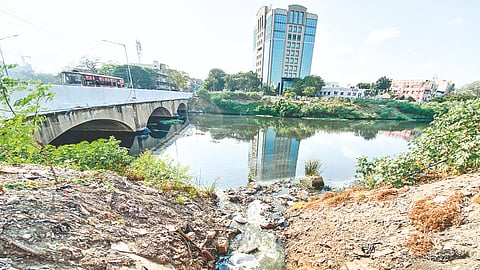
CHENNAI: The city’s polluted Cooum river could be in line for a sweeping makeover, with the State inviting global consultancy firms to draw up a restoration plan for its 27.3-km stretch from Paruthipattu Bridge to the Bay of Bengal. The stretch was identified in a 2023 feasibility report by Tamil Nadu Water Investment Company Limited.
The Cooum originates near Sattarai village, about 65 km from Chennai, at the Kesavaram anicut in Tiruvallur, and flows through Poonamallee before entering Chennai at Maduravoyal, passing through Choolaimedu, Chetpet, Egmore and Chindadripet. After crossing Napier Bridge, it empties into the Bay of Bengal, south of Fort St George.
The proposed plan will target 5 key trouble spots: sewage flowing into the river, poor flood-carrying capacity, garbage dumping, neglected riverfronts and damaged ecosystems. The Chennai Rivers Transformation Company Limited (CRTCL) has floated a global request for proposal to prepare a detailed project report (DPR) and provide transaction advisory services.
The consultants will first map sewage outlets and identify ways to stop untreated and partially treated wastewater from entering the river. The plan will cover interceptor pipelines, trunk sewers and pumping stations wherever gravity-based flow is not feasible. Existing sewage treatment plants will also be assessed for capacity and performance, with decentralised treatment and nature-based solutions considered where suitable.
Secondly, the river channel. Consultants will assess where desilting, removal of debris, bank protection and flood embankments are needed to improve water flow and reduce flood risk. Bridges, culverts, weirs and regulators will also be examined. The study must factor in tidal backflow, the river mouth, storm water drainage and the impact of flooding.
Third one would be the riverfront. The plan will explore promenades, parks, play areas, seating spaces, cultural and heritage nodes, and public amenities. These facilities will have to be designed to withstand flooding while protecting the river’s ecology.
Fourth, garbage choking the river. Consultants will identify dumping hotspots and assess waste entering through drains, bank-side dumping and floating debris. The proposed measures include waste traps, screens, booms and skimmers, along with systems for collection, segregation, recycling, processing and safe disposal. The plan will also examine composting, bio-methanation and other waste-recovery options.
Lastly, it will seek to revive the river’s ecology through native vegetation, wetland restoration, removal of invasive species and creation of habitats for fish and birds. The study will also examine environmental flow requirements and ways to improve water quality through nature-based interventions.
All five components will be brought under a single River Rejuvenation Master Plan, with works prioritised stretch by stretch based on pollution levels, flood conditions, land availability and ecological needs.