
- Chennai
- Tamil Nadu
- India
- World
- EntertainmentEntertainment
- Business
- Sports
- Lifestyle
- Technology
- Videos
- Explainers
- Editor's Picks

CHENNAI: In a significant development, the 165-day-long protest by hundreds of Greater Chennai Corporation (GCC) sanitation workers against the privatisation of Solid Waste Management (SWM) in the Royapuram and Thiru Vi Ka Nagar zones, which included a harrowing 57-day hunger strike, was called off on Monday after Hindu Religious and Charitable Endowments (HR&CE) Minister PK Sekar Babu and Chennai Mayor R Priya assured them of reinstatement by the end of January.
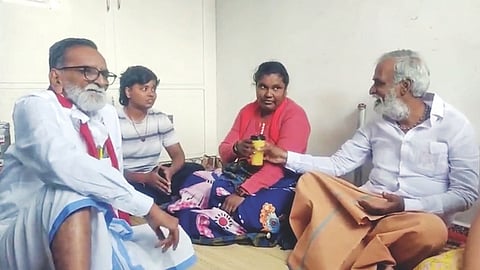
The minister and the mayor met the protesters at the head office of Uzhaipoor Urimai Iyakkam (UUI) in Ambattur. In a symbolic gesture, Sekar Babu offered juice to S Lakshmi, one of the four workers in the final phase of the hunger strike, formally ending their fast.
He promised to meet their core demands, including reinstatement to their former positions under the GCC and a resolution regarding their salary scales. While the workers sought a deadline of January 20, Sekar Babu stated the administration would work to complete the process by January 30. He also assured that their demand for permanent status would be addressed and paid tribute to their dedication, comparing it to a mother’s selfless care.
The agitation began on August 1 last year, triggered by the Corporation's move to hand over SWM operations to Chennai Enviro Solutions Private Limited (CESPL). The workers' unions, UUI and the Left Trade Union Congress (LTUC), claimed that 1,952 workers were illegally dismissed. Workers, who had been struggling without income for six months, took part in the protest, and four cleanliness workers died during the course of the agitation.
Their demonstration took multiple forms over the months. It began with a camp outside the GCC headquarters, which garnered widespread attention and visits from political leaders and celebrities. After failed talks led to their detention by police on August 13, the workers engaged in numerous creative and intense protests. These included sweeping roads, staging road blockades, marching to the Secretariat and the Cooum River, sleeping in cemeteries, and holding sit-ins at prominent memorials and political party offices.
The hunger strike commenced on November 17, conducted in phases with legal permission from the Madras High Court. The third and final phase involved four women, three of whom had to step down due to severe health issues before the minister's intervention.
Reacting to the assurance, UUI president K Bharathi termed it a "first round of victory", stressing that final victory would only come when workers actually resume their duties and urged the Corporation to grant permanency to Self Help Group (SHG) workers in other zones.
J Geetha, a cleanliness worker and single mother, expressed relief, recounting the hardship of the past six months. "I worked hard for 15 years to earn Rs 23,000 a month. I had to borrow money from lenders to make ends meet for my family," she shared.
Minister Sekar Babu, addressing the press, credited Chief Minister MK Stalin for bringing a resolution and various political leaders for their efforts in facilitating talks. Expressing hope that the upcoming Pongal festival would now be a happy one for the cleanliness workers, he stated that a decision on restoring their previous salary rates will be taken promptly.