
- Chennai
- Tamil Nadu
- India
- World
- EntertainmentEntertainment
- Business
- Sports
- Lifestyle
- Technology
- Videos
- Explainers
- Editor's Picks

This programme celebrates Ambika’s 55 years in the arts and 40 years as a guru.
CHENNAI: For more than four decades, Bharatanatyam exponent Dr Ambika Kameshwar has believed that dance should never be limited by age or ability. For her, art is a gift that is meant to be nurtured, preserved and shared.
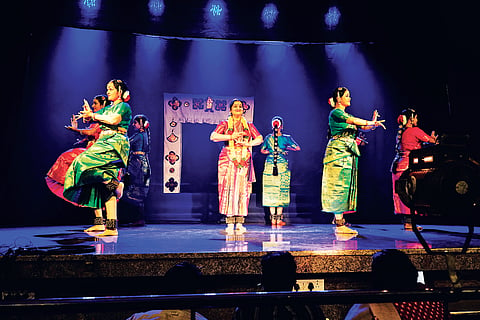
“Art allows us to transcend every limitation and enter a space of unbelievable joy. That is the greatest gift anyone can receive,” says Ambika, who is celebrating 55 years of her dance journey. To mark the milestone, Rasa Arpita (Academy for the Research and Performance of Indian Theatre Arts) will present an event titled ‘Kala Rasa Parampara Vaibhava’ on July 5 at 4 pm at Rukmini Arangam, Kalakshetra Foundation.
This programme celebrates Ambika’s 55 years in the arts and 40 years as a guru. One of its highlights will be performances by artistes with visual and intellectual disabilities, reaffirming her belief that art is universal and accessible to everyone.
For Ambika, teaching has always been as important as performing. “It is my duty to look at art in two ways. One is to nurture the talent I have been given. The other is to preserve it and share it. Only then will it grow and reach more people. That has been my philosophy in art and in life.”
The celebration is less about looking back and more about watching generations of students carry the tradition forward. “This event is special because it brings together students from different generations. They have understood not only the basics of the art but also its depth and grandeur. Today, they are taking that legacy forward through their performances. That is the most fulfilling part for me,” smiles the dancer.
The programme will also bring together many of her disciples from outside the institution. “It is not just my students at Rasa who are participating. The art has travelled through so many people over the years and they are all coming together to celebrate this milestone.”
Founded by Ambika, Rasa has trained generations of dancers while working to make the arts accessible to children and adults with disabilities through music, movement and dance. Speaking about the programme, Dr Vaishnavi Poorna, deputy director of Rasa and Ambika’s daughter and disciple, says the event is a tribute to her guru’s vision.
“This celebration is our offering of gratitude to a legend who taught us that natya belongs to everyone and has the power to nurture the fullest potential within each person. The greatest tribute we can offer our guru is to carry this vision forward so that many more people can experience the transformative power of the arts.”
Vaishnavi says the evening has been carefully curated from Ambika’s choreographic works. “We have selected compositions choreographed and tuned by Ambika Kameshwar, including pieces from the traditional Bharatanatyam repertoire. Among the performers will be students from Shree Ramana Maharishi Academy for the Blind in Bengaluru, where my mother first began working with visually impaired children years ago. We are happy to welcome them back. They will present a piece on universal love. We also have artistes with special abilities performing a movement interpretation of Margazhi. The ensemble is a mix of differently abled artistes and seasoned performers,” shares Vaishnavi.
Teaching dance to visually impaired students involves a different process, she explains. “They feel the teacher’s hand gestures and reproduce them. To understand the stage, they measure the performance space with their feet. We narrate the story behind each piece and they even understand facial expressions by feeling the teacher’s face before recreating the emotion.”
Students with intellectual disabilities respond differently. “They have a remarkable ability to imitate. When movements are broken down into small, simple modules, they can understand and perform even subtle expressions beautifully.”