
- Chennai
- Tamil Nadu
- India
- World
- EntertainmentEntertainment
- Business
- Sports
- Lifestyle
- Technology
- Videos
- Explainers
- Editor's Picks
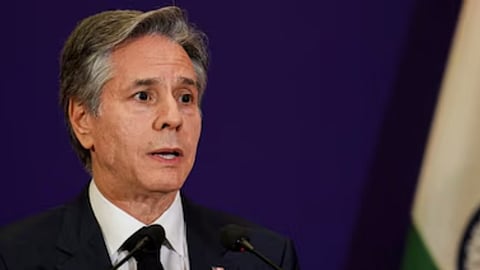
NEW DELHI: The US must respect India's right to defend itself and should maintain a zero-tolerance policy towards terrorism, former US Secretary of State Antony Blinken said on Saturday, while describing Washington's ties with New Delhi and Islamabad as "fundamentally different".
"India is a global force," Blinken said, adding that the relationship and shared interests between Washington and New Delhi were "really global in nature".
In contrast, the US relationship with Pakistan is "regional", he said during a conversation with Jawed Ashraf, chairman of the India Trade Promotion Organisation, at the Hindustan Times Leadership Summit 2026 in New Delhi.
"The relations with Pakistan are regional, and there are still going to be important areas where we need to do things with them, particularly, for example, when it comes to counter-terrorism, but these are fundamentally different relationships," he said.
"We have to have a zero-tolerance policy for terrorism. Period. And that means that we have to have respect for India's right to defend itself," he added.
Blinken said the US approach must include support for India's efforts to respond to attacks as well as diplomatic efforts to prevent an escalation between New Delhi and Islamabad, the two nuclear-armed neighbours.
He added that efforts to prevent escalation were important given the destructive potential of the weapons both countries possess.
Reflecting on Washington's past engagement with Islamabad, Blinken said US strategic interests during the Cold War and the war in Afghanistan may have led successive administrations to be less critical of Pakistan's civil-military establishment.
"And there's certainly an opportunity for the United States to do more," he added.
On India-US relations, Blinken described the transformation in ties over the past few decades as a shift from estrangement to a strategic partnership, underpinned by shared interests and people-to-people connections.
"We moved from estrangement to a genuine and, in some ways, unique partnership, built on a convergence of strategic interests. Of course, it is also underpinned by the profound people-to-people connections between our societies," he said.
He identified cooperation in emerging technologies as an important area for the two countries, pointing to collaboration in space, quantum technology and artificial intelligence.
"The next step is tech cooperation, our ability to work in space, tech, quantum, and artificial intelligence," he said.
On India's relations with Russia, Blinken acknowledged the partnership's historical depth and said Washington did not expect New Delhi to sever those ties.
"There will be places where we don't have the same perspectives. For Russia, we understand there is deep history between India and Russia. So, we don't want them to end it," he said.
Blinken, who served as the 71st Secretary of State from 2021 to 2025 under then-President Joe Biden, also discussed how the changing global order affects the United States, including the impact of domestic political developments and the midterm elections on its international engagement.
He spoke about the current Donald Trump administration's approach to global affairs and the wider implications of shifts in American politics for its relationships with allies and partners.
The conversation covered the conflicts in West Asia, including the ongoing one involving the US, Israel and Iran, and the risks posed by the continuing confrontation to regional stability and international security.
Blinken discussed the strategic importance of the Strait of Hormuz and the implications of disruption to shipping through the waterway, a critical route for global energy supplies.
He stressed the need to prevent a wider regional conflict and discussed the role of diplomacy in addressing the crisis and securing a path towards de-escalation.