
- Chennai
- Tamil Nadu
- India
- World
- EntertainmentEntertainment
- Business
- Sports
- Lifestyle
- Technology
- Videos
- Explainers
- Editor's Picks
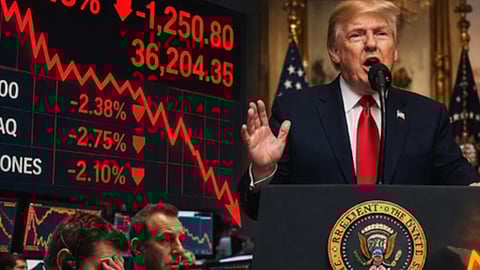
WASHINGTON: Global markets fell, and oil prices rose after US President Donald Trump signalled the Iran conflict would continue for weeks, raising concerns about supply disruptions and prolonged economic fallout, according to American media reports.
US stock futures declined after Trump’s address, with S&P 500 futures down about 0.8 per cent, Nasdaq futures losing around 1 per cent, and Dow futures falling roughly 350 points, reported US media, including The Wall Street Journal, The New York Times, and CNBC.
Asian markets also weakened in early trading. South Korea’s Kospi dropped more than 2 per cent, while Japan’s Nikkei fell, reflecting investor unease over the outlook for energy supplies.
Oil prices climbed sharply as traders reacted to Trump’s warning that the United States would hit Iran “extremely hard over the next two to three weeks” if no deal is reached.
The global benchmark rose more than 3 per cent during and after the speech, with Brent crude moving above $105 per barrel in Asian trading, reports said.
The Wall Street Journal and other outlets said investors had been looking for signs of de-escalation or a clearer exit strategy. Instead, even if Trump reiterated that the war was nearing completion, he also signalled further military action, adding to uncertainty over the timeline.
Markets remain focused on the Strait of Hormuz, a key route for global oil shipments that has been disrupted during the conflict.
Analysts said continued disruption in the waterway could tighten global supply and keep prices elevated.
A report by Oxford Economics, The New York Times reported, estimated the war has already resulted in a 10 per cent shortfall between global oil supply and demand, raising the risk of “widespread rationing” and supply chain disruptions in emerging economies.
Higher energy costs are also feeding inflation concerns. US gasoline prices have crossed $4 per gallon, adding pressure on households and businesses, according to reports.
Trump acknowledged rising fuel prices but described them as temporary and said markets would stabilise once the conflict ends.
However, economists said the impact could last longer, with some revising down growth forecasts and raising the risk of a slowdown if the conflict drags on.
