
- Chennai
- Tamil Nadu
- India
- World
- EntertainmentEntertainment
- Business
- Sports
- Lifestyle
- Technology
- Videos
- Explainers
- Editor's Picks

CHENNAI: For Tamil Nadu’s automotive ecosystem, anchored by the Chennai manufacturing belt, the relaunch of Renault’s Duster after 14 years, is more than a product comeback.
It signals the French carmaker’s attempt to reboot its India strategy after years of lull, using its Oragadam plant, deep localisation and exports as the fulcrum of revival. It is also looking at improving its market share to over 3 per cent from the current 1 per cent garnered from sale of less than 40,000 units across its three products such as Kwid, Kiger and Triber. The automaker’s market share has slipped below 1 per cent in the over 43 lakh strong passenger vehicle segment.
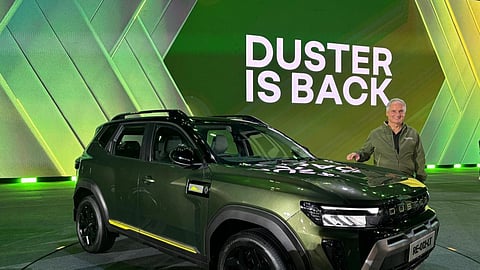
At a media roundtable here on Tuesday, Venkatram Mamillapalle, MD, Renault India, said the new Duster has been rebuilt from the ground up, even as it retains the ‘DNA’ that once made it a best-seller.
“The car is new. We’ve only kept the DNA,” he said, underlining that the SUV comes with upgraded ride and handling, a powerful petrol engine, 212 mm ground clearance and a long feature list, including Google automotive system and a panoramic sunroof.
TN plays a central role in this reset. Renault’s Chennai plant (now fully owned by the company) comes with an installed capacity of 4.8 lakh units, though utilisation has dropped to around 48 per cent following weak volumes over the past three years. “Why would we buy a plant with more than 50 per cent idle capacity if we were not here to stay and grow in India?” Mamillapalle asked, adding that capacity utilisation could rise to about 70 per cent with the Duster and its upcoming hybrid variants.
The lull, he said, was driven less by India-specific missteps and more by a cascade of global disruptions. Renault was hit by the Covid-19 pandemic, semiconductor shortages, cash constraints and a forced exit from Russia following the Ukraine war. “We didn’t have money. Europe had to be fixed first,” Mamillapalle said, noting that under CEO Luca de Meo, Renault stabilised its European operations before turning attention back to markets such as India, Brazil and Korea.
A key differentiator this time, he said, is localisation. Renault claims over 90 per cent tier-1 localisation and nearly 80 per cent localisation in the supplier chain, including components such as screens manufactured in and around Chennai. “This level of localisation gives India a cost advantage that even Europe doesn’t fully have,” he said.
Exports are set to be the second growth engine. Renault already ships around 20 per cent of its output, primarily to South Africa, and sees the proposed India–EU FTA as a potential catalyst. “FTA will benefit auto components like hell and allow India-made left-hand-drive vehicles to go to Europe,” Mamillapalle said. Chennai and Ennore ports, he added, are critical enablers as western ports face congestion.
Beyond numbers, Renault is also betting on brand recall. “Duster carries two generations of memory. The father who bought it and the child who grew up in it,” Mamillapalle said. “Why not capitalise on that nostalgia?”
Renault on Monday unveiled the new Duster, which would compete with the likes of Maruti Grand Vitara, Kia Seltos, Hyundai Creta, Tata Sierra in one of the most competitive segments in the domestic passenger vehicle segment.
Renault India stopped production of the Duster at its Sriperumbudur plant in 2022, 10 years after rolling out the first unit in July 2012.