- Chennai
- Tamil Nadu
- India
- World
- EntertainmentEntertainment
- Business
- Sports
- Lifestyle
- Technology
- Videos
- Explainers
- Editor's Picks
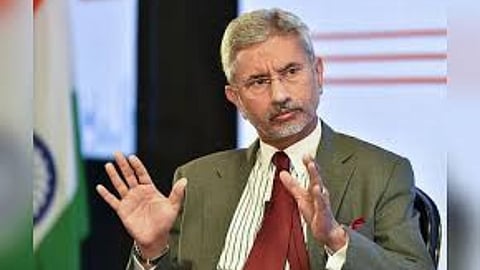
NEW DELHI: India and Russia need to address issues such as non-tariff barriers and regulatory impediments to increase the two-way annual trade to USD 100 billion by 2030, External Affairs Minister S Jaishankar said on Monday while reaffirming New Delhi's steadfast commitment to strengthening the long-standing partnership with Moscow.
"In today's evolving geo-political dynamics, our engagement continues to deepen," he said in a virtual address at a conference titled "India and Russia: Towards a new bilateral agenda".
Russian Foreign Minister Sergey Lavrov lauded India's "independent foreign policy" and said that Russia looks forward to welcoming Prime Minister Narendra Modi for a visit this year.
In his remarks, Jaishankar said the evolving multipolar order requires greater cooperation between India and Russia, including through BRICS, the Shanghai Cooperation Organisation (SCO), G20 and the UN.
India is looking forward to closely working with Russia to address shared challenges in a "balanced and inclusive manner", he said.
"India and Russia share a special and privileged strategic partnership rooted in trust and mutual respect. Over decades, our mutually beneficial cooperation has advanced regional and global peace, stability and progress," Jaishankar said.
The external affairs minister also made a mention of outcomes that emerged from Russian President Vladimir Putin's visit to New Delhi in December last year.
"Both sides are committed to increasing the present annual trade from USD 68.7 billion to USD 100 billion by 2030 in a balanced and sustainable manner," he said.
To this effect, "we must continue efforts to conclude the India--Eurasian Economic Union free trade agreement and address non-tariff barriers and regulatory impediments and utilise the skilled Indian workforce," he said.
The external affairs minister's remarks assumed significance as they came against the backdrop of the crisis in West Asia.
Following talks between PM Modi and Russian President Vladimir Putin in December, India and Russia unveiled a raft of measures including a five-year roadmap to build a robust economic partnership and to increase the annual trade to USD 100 billion by 2030.
Jaishankar also described Russia as India's "foremost partner" in the civil nuclear energy sector.
"As India aims to increase its nuclear energy generation capacity to 100 GW by 2047, I am confident that it will find a trusted and reliable partner in Russia for peaceful uses of nuclear energy," he said.
In his comments, Lavrov said the "time-tested" Russia-India friendship is a model on interstate relations based on mutual trust and respect.
"New Delhi deserves the deepest respect for pursuing an independent foreign policy as part of its course toward strategic autonomy, consistently prioritising the national interest," he said.
"The time-tested Russian-Indian friendship is a model of how interstate relations based on equality, mutual trust and respect, and consideration of each other's interests can and should be built," he added.