
- Chennai
- Tamil Nadu
- India
- World
- EntertainmentEntertainment
- Business
- Sports
- Lifestyle
- Technology
- Videos
- Explainers
- Editor's Picks
AGRA(UP): India on Friday said that the cooperation among BRICS nations can help strengthen micro, small and medium enterprises, support weaker sections and contribute to the economic growth of member countries.
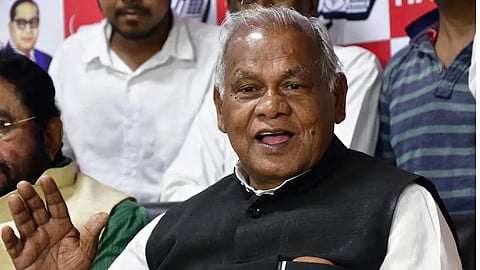
Addressing the BRICS MSME Forum here, Union Minister Jitan Ram Manjhi said that the Prime Minister Narendra Modi-led government has taken several steps to promote the MSME sector.
Referring to BRICS cooperation, Manjhi said the grouping, which earlier had seven countries and has now expanded to 21 nations, could help strengthen MSMEs, support weaker sections and contribute to the economic growth of member countries.
He said around 8.5 crore MSME units are currently functioning in the country, providing employment to nearly 40 crore people.
Manjhi, Minister of MSME, emphasized the importance of collective action in shaping the future of MSMEs across BRICS nations.
"MSMEs are central to achieving inclusive and sustainable economic development. The challenges facing enterprises today whether related to financing, technology adoption, sustainability or market access require collaborative solutions. BRICS countries possess immense strengths and complementary capabilities. Through continued dialogue and cooperation, we can build a robust framework that empowers MSMEs to become drivers of innovation, exports and employment," he noted.
He reaffirmed India's commitment to fostering stronger economic partnerships and facilitating knowledge-sharing among BRICS member countries.
The three-day BRICS MSME Forum began on Friday with participation from around 60 delegates from BRICS nations and 150 officials associated with the MSME sector.
Addressing the forum, Uttar Pradesh MSME Minister Bhupendra Chaudhary said the MSME sector in the state was a key pillar of employment, innovation and economic development.
He said around 96 lakh MSME units are operational in Uttar Pradesh, providing employment to nearly 1.65 crore people.
"Uttar Pradesh has emerged as one of India's fastest-growing economic regions with MSMEs playing a transformative role in employment generation and grassroots development. Our focus remains on creating an enabling ecosystem through infrastructure development, policy support, skill enhancement and digital empowerment. The exchange of global best practices through platforms such as the BRICS MSME Forum will further strengthen these efforts," he said.
The minister highlighted initiatives including the One District One Product (ODOP) scheme, the Youth Entrepreneur Development Campaign and industrial policies aimed at connecting local products and traditional crafts with global markets.
Bharat Khera, Secretary, Ministry of MSME emphasised the critical role of MSMEs in shaping resilient and inclusive economies.
"MSMEs are not merely economic units; they are engines of innovation, employment, entrepreneurship and regional development. As BRICS economies continue to expand their global influence, there is immense potential for collaboration in areas such as technology adoption, sustainable manufacturing, digital transformation, skilling, and market access. Through stronger partnerships and knowledge-sharing, we can build MSME ecosystems that are resilient, competitive and globally connected," Khera said.
Rajneesh, Additional Secretary & Development Commissioner, Ministry of MSME, presented the key outcomes emerging from the three BRICS SME Working Group Meetings and outlined the priorities that have emerged through sustained engagement among member countries.
The Forum followed the 3rd BRICS SME Working Group Meeting. It marked a significant milestone in advancing economic cooperation among BRICS nations through a dedicated focus on Micro, Small and Medium Enterprises'the backbone of economic growth, innovation, and employment generation.
Yogita Swaroop, Principal Economic Adviser, Department for Promotion of Industry and Internal Trade (DPIIT), Government of India, highlighted the importance of policy coordination and enabling frameworks to support enterprise growth.
"The future of economic growth will increasingly be driven by innovative and agile enterprises. MSMEs occupy a pivotal position in this transformation. Strengthening ease of doing business, improving access to finance, fostering innovation ecosystems and facilitating international market linkages will be critical in unlocking the next phase of growth across BRICS economies," she said.
The delegates are also scheduled to visit the Taj Mahal, Agra Fort and a footwear manufacturing unit to understand the city's export-oriented shoe industry.
BRICS countries include Brazil, Russia, India, China, and South Africa as founding members, along with Egypt, Ethiopia, Indonesia, Iran, Saudi Arabia, and the United Arab Emirates (UAE). Besides, the grouping also has partner countries, including Belarus, Bolivia, Cuba, Kazakhstan, Malaysia, Nigeria, Thailand, Uganda, Uzbekistan, and Vietnam.
Apart from India and other BRICS nations, policymakers, industry leaders, entrepreneurs, and other stakeholders from partner countries have also gathered to deliberate on strengthening global MSME ecosystems, fostering sustainability and enhancing international cooperation.Addressing the BRICS MSME Forum here, Union Minister Jitan Ram Manjhi said that the Prime Minister Narendra Modi-led government has taken several steps to promote the MSME sector.
Referring to BRICS cooperation, Manjhi said the grouping, which earlier had seven countries and has now expanded to 21 nations, could help strengthen MSMEs, support weaker sections and contribute to the economic growth of member countries.
He said around 8.5 crore MSME units are currently functioning in the country, providing employment to nearly 40 crore people.
Manjhi, Minister of MSME, emphasized the importance of collective action in shaping the future of MSMEs across BRICS nations.
"MSMEs are central to achieving inclusive and sustainable economic development. The challenges facing enterprises today whether related to financing, technology adoption, sustainability or market access require collaborative solutions. BRICS countries possess immense strengths and complementary capabilities. Through continued dialogue and cooperation, we can build a robust framework that empowers MSMEs to become drivers of innovation, exports and employment," he noted.
He reaffirmed India's commitment to fostering stronger economic partnerships and facilitating knowledge-sharing among BRICS member countries.
The three-day BRICS MSME Forum began on Friday with participation from around 60 delegates from BRICS nations and 150 officials associated with the MSME sector.
Addressing the forum, Uttar Pradesh MSME Minister Bhupendra Chaudhary said the MSME sector in the state was a key pillar of employment, innovation and economic development.
He said around 96 lakh MSME units are operational in Uttar Pradesh, providing employment to nearly 1.65 crore people.
"Uttar Pradesh has emerged as one of India's fastest-growing economic regions with MSMEs playing a transformative role in employment generation and grassroots development. Our focus remains on creating an enabling ecosystem through infrastructure development, policy support, skill enhancement and digital empowerment. The exchange of global best practices through platforms such as the BRICS MSME Forum will further strengthen these efforts," he said.
The minister highlighted initiatives including the One District One Product (ODOP) scheme, the Youth Entrepreneur Development Campaign and industrial policies aimed at connecting local products and traditional crafts with global markets.
Bharat Khera, Secretary, Ministry of MSME emphasised the critical role of MSMEs in shaping resilient and inclusive economies.
"MSMEs are not merely economic units; they are engines of innovation, employment, entrepreneurship and regional development. As BRICS economies continue to expand their global influence, there is immense potential for collaboration in areas such as technology adoption, sustainable manufacturing, digital transformation, skilling, and market access. Through stronger partnerships and knowledge-sharing, we can build MSME ecosystems that are resilient, competitive and globally connected," Khera said.
Rajneesh, Additional Secretary & Development Commissioner, Ministry of MSME, presented the key outcomes emerging from the three BRICS SME Working Group Meetings and outlined the priorities that have emerged through sustained engagement among member countries.
The Forum followed the 3rd BRICS SME Working Group Meeting. It marked a significant milestone in advancing economic cooperation among BRICS nations through a dedicated focus on Micro, Small and Medium Enterprises'the backbone of economic growth, innovation, and employment generation.
Yogita Swaroop, Principal Economic Adviser, Department for Promotion of Industry and Internal Trade (DPIIT), Government of India, highlighted the importance of policy coordination and enabling frameworks to support enterprise growth.
"The future of economic growth will increasingly be driven by innovative and agile enterprises. MSMEs occupy a pivotal position in this transformation. Strengthening ease of doing business, improving access to finance, fostering innovation ecosystems and facilitating international market linkages will be critical in unlocking the next phase of growth across BRICS economies," she said.
The delegates are also scheduled to visit the Taj Mahal, Agra Fort and a footwear manufacturing unit to understand the city's export-oriented shoe industry.
BRICS countries include Brazil, Russia, India, China, and South Africa as founding members, along with Egypt, Ethiopia, Indonesia, Iran, Saudi Arabia, and the United Arab Emirates (UAE). Besides, the grouping also has partner countries, including Belarus, Bolivia, Cuba, Kazakhstan, Malaysia, Nigeria, Thailand, Uganda, Uzbekistan, and Vietnam.
Apart from India and other BRICS nations, policymakers, industry leaders, entrepreneurs, and other stakeholders from partner countries have also gathered to deliberate on strengthening global MSME ecosystems, fostering sustainability and enhancing international cooperation.
