
- Chennai
- Tamil Nadu
- India
- World
- EntertainmentEntertainment
- Business
- Sports
- Lifestyle
- Technology
- Videos
- Explainers
- Editor's Picks

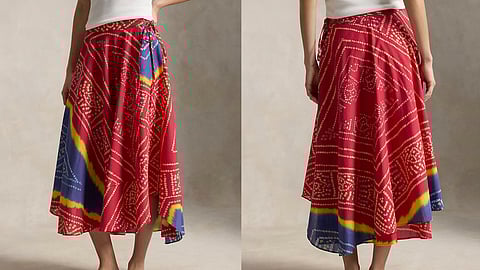
CHENNAI: A Rs 44,800 'Print Cotton Wrap Skirt' on Ralph Lauren's website is drawing sharp criticism online, not for its price tag, but for borrowing from India's centuries-old Bandhini tie-dye tradition without acknowledging its roots.
As global fashion draws freely from diverse cultures, the line between inspiration and appropriation has never been more contested.
The product description stops with "a vibrant design inspired by traditional Bandhini tie-dye techniques and motifs" but mentions nothing about the roots of Bandhini print nor its origin in India.
Although this seems trivial, minute even, this subtle omission of details has the internet ablaze. Netizens are tired of a world that takes from its culture, without paying homage to its place of origin.
Social media users have voiced their vehement opposition with comments like, "Really need to call them out for stealing our traditions" and "A heritage craft becomes 'luxury fashion' but the original creators are invisible."
This is not the first time luxury fashion has drawn controversy of this kind. Brands like Prada and Ralph Lauren have previously been called out for incorporating traditional Indian elements, such as Kolhapuri-style footwear and jhumkas, without crediting their origins.
Bandhini print is a traditional tie-dye technique from India, characterized by intricate patterns created by a painstaking, long-drawn process of tightly binding sections of fabric before dyeing. This art form is especially prominent in regions like Gujarat and Rajasthan, where it has been practiced for centuries.
Consumers of this age are increasingly interested in knowing the story behind the products they consume, and clothes are no exception. Social media has empowered people to call out cultural appropriation, parading as inspiration.
Cultural appropriation exploits elements of a culture for profit, offering no respect or credit in return. Cultural appreciation, by contrast, draws from other traditions thoughtfully, acknowledging both the significance and the source.
The fashion industry is being guided towards a more mindful and responsible way of integrating global cultures with fashion.