
- Chennai
- Tamil Nadu
- India
- World
- EntertainmentEntertainment
- Business
- Sports
- Lifestyle
- Technology
- Videos
- Explainers
- Editor's Picks

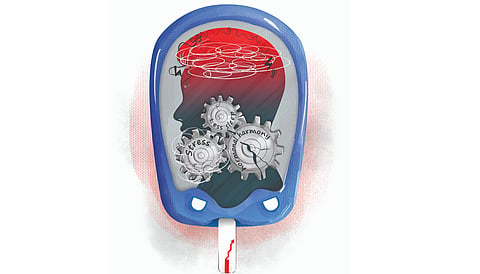
CHENNAI: India has more than 100 million people with diabetes and another 136 million with pre-diabetes. However, while the usual suspects like sugar, refined carbohydrates and sedentary lifestyle gets most of the blame, a growing body of research points to a less visible culprit – the frequent activation of stress hormones that quietly cripple the body’s ability to manage blood sugar.
With an ICMR-INDIAB study finding one in two individuals who were tested showing elevated blood sugar levels and 8 in 10 people over 60 having diabetic or pre-diabetic readings, the need for a comprehensive approach to prevention has never been greater, say health experts.
Every time you face a deadline, a traffic jam or a sleepless night, the body releases a cocktail of hormones designed for survival, including cortisol and adrenaline, which flood the bloodstream.
Doctors note that cortisol and adrenaline are not inherently harmful as they are the hormones that help you wake up in the morning, respond to danger and mobilise energy when you need it most.
Adrenaline acts within seconds, triggering the release of glucose from the liver and temporarily reducing insulin sensitivity so that glucose is available to muscles. Cortisol works more slowly but more persistently by promoting gluconeogenesis, the production of new glucose, while inhibiting the peripheral use of glucose by tissues.
Explaining the phenomenon, senior diabetologist Dr C Ananthakrishnan from Prashanth Hospitals says, “In short bursts, this response is protective. But when stress becomes chronic and when the body never gets the signal to stand down, these same hormones begin to sabotage your metabolism. They drive insulin spikes, promote insulin resistance and steadily push scores of people toward type 2 diabetes.”
He further explained that while the body has many hormones balancing our system on an everyday basis, insulin is the only hormone designed to have a counter regulatory mechanism which can spike the blood sugar levels.
While diet and exercise have long been the focus of diabetes prevention, research reveals that two overlooked yet equally powerful forces are quietly driving the diabetic epidemic, especially among those in the pre-diabetic stage: chronic sleep deprivation and unmanaged stress.
Health experts point out that sleep is far from a passive state, as a lot of hormonal changes happen during this cycle. During the two main sleep phases, the rapid eye movement (REM) sleep and non-REM sleep, a cycle roughly every 90 minutes, the body regulates a medley of hormones, including cortisol, growth hormone and insulin critical for glucose metabolism.
“When the body’s circadian rhythm gets disturbed, the cortisol levels remain elevated and this leads to low grade chronic inflammation in the body that causes weight gain and insulin resistance,” explained diabetologist and endocrinologist Dr Vidhya Jahagirdar from Kovai Medical College Hospital. “When sleep is cut short, this delicate hormonal harmony collapses.”
A 2023 review published in Cureus analysed 11 studies and found that short sleepers, especially those getting less than six hours per night, had significantly higher levels of circulating insulin during fasting, elevated fasting glucose and worse scores on the homeostatic model assessment for insulin resistance (HOMA-IR). In one study of adults with type 2 diabetes, insufficient sleep and poor sleep hygiene were directly linked to increased glycated haemoglobin (HbA1c) levels, a gold-standard measure of long-term blood sugar control.
“Sleep deprivation reduces insulin sensitivity, meaning the body’s cells become less responsive to insulin’s signal to absorb glucose from the bloodstream. Irregular sleep schedules and shift work disrupt the internal clock that governs glucose metabolism, leading to impaired glucose tolerance and a heightened risk of type 2 diabetes,” said Dr Vidhya.
A 2025 study published in the Journal of Clinical and Diagnostic Research examined sleep quality and metabolic syndrome in young adults attending a medical college in Tamil Nadu. Among 153 participants with a mean age of just 20 years, 41.2% had sleep disturbances.
Short sleep duration was significantly associated with metabolic syndrome, with every one-hour reduction in sleep increasing the odds by 2.12 times. Nearly 10% of these young adults already met the criteria for metabolic syndrome, a condition that includes obesity, cholesterol and elevated fasting glucose.
If sleep loss is the silent killer, chronic stress is its equally destructive partner is crime, opine doctors. When the brain perceives a threat, it activates the hypothalamic-pituitary-adrenal (HPA) axis and the sympathoadrenal system, releasing a cascade of hormones including cortisol, adrenaline and noradrenaline.
While cortisol dramatically reduces the skeletal muscle’s ability to absorb glucose and causes blood sugar levels to rise, even the pancreas is not spared. Corticosteroids directly impair the ability of pancreas to produce and secrete insulin, leading to hyperglycaemia and heightened insulin resistance.
Doctors note that this system was designed for short-term emergencies such as a predator, a famine or a sudden threat. “But modern life has transformed acute stress into a chronic condition,” says Dr Ananthakrishnan. “Workplace pressure, financial worry, sleep deprivation and constant digital connectivity keep the hypothalamic-pituitary-adrenal (HPA) axis, the body’s central stress response system, in a state of continuous activation. The result is a consistent elevation of cortisol and adrenaline that the body was never built to sustain.”
It’s imperative to note that the link between cortisol and metabolic dysfunction in Indian populations is not merely an assumption, as there are several studies that prove it.
Recently, a cross-sectional study was conducted at a medical college in Vijayapur, Karnataka, in which researchers compared police constables, bank employees and a control group to measure perceived stress, serum cortisol, fasting glucose, insulin, and HOMA-IR.
The results showed that occupational stress significantly elevated both stress scores and insulin resistance. Bank employees, despite not being the youngest or most physically strained group, showed the highest discrimination for insulin resistance.
Similarly, a study of adults with type 2 diabetes at a medical college in Tamil Nadu found that higher stress scores were significantly associated with poorer glycemic control and longer disease duration. “The explanation is simple as chronic stress keeps cortisol and adrenaline elevated, disrupting glucose metabolism and favouring fat accumulation around the abdomen which is significantly linked to insulin resistance,” explains Dr Vidhya.
While the repercussions for pre-diabetics are significant, for those already living with diabetes, the situation is worse. The two-way relationship between sleep and diabetes means that poor glycemic control can actively destroy sleep quality, which in turn worsens blood sugar control.
High blood sugar levels increase the frequency of urination during the night, directly interrupting sleep. They can also cause headaches, excessive thirst and difficulty falling back asleep after waking. On the other end of the spectrum, nocturnal hypoglycemia can lead to reduced sleep quality, daytime sleepiness and irregular sleep patterns.
Those who take insulin or other glucose-lowering medications frequently experience complications of diabetes that further affect sleep quality. They often lose sleep over conditions like peripheral neuropathy, a nerve damage that causes pain, tingling or numbness in the hands and feet which can make it impossible to find a comfortable sleeping position.
Apart from this, obstructive sleep apnoea (OSA) is one of the critical concerns of diabetics. People with type 2 diabetes are significantly more likely to develop OSA, a condition where breathing repeatedly stops and starts during sleep. OSA is strongly correlated with obesity. Also, sleep apnoea increases insulin resistance even in individuals who do not already have diabetes and are not overweight.
Since cortisol and the HPA axis are influenced by early-life experiences, the stress burden carried by one generation can affect the metabolic health of the next. Especially for those who fall in the pre-diabetic zone, managing stress is not a luxury but a necessity, says Dr Ananthakrishnan.
“This is the critical window where lifestyle interventions can still reverse the trajectory toward full-blown diabetes, but it is also the period when the metabolic damage from poor sleep and chronic stress begin to seriously affect the lifestyle,” he adds.
Research has shown that short sleep duration has a significant link to increased risk of obesity and type 2 diabetes. Sleep loss also drives weight gain, a major risk factor for pre-diabetes progression. A lack of sleep triggers hormonal changes that increase appetite, while simultaneously reducing energy levels and discouraging physical activity.
Excess glucocorticoids increase glucose and insulin levels while decreasing adiponectin, a hormone that regulates glucose levels and fatty acid breakdown. For pre-diabetics, the hormonal imbalance can accelerate the progression to full diabetes.
1. Prioritise sleep: Sleep and stress are modifiable risk factors, unlike genetics or age. “It is imperative to prioritise sleep hygiene. Adults should aim for seven to eight hours of quality sleep at night. Maintaining a consistent sleep schedule, avoiding screens before bed and limiting caffeine and alcohol in the evening can all help,” says Dr Vidhya.
2. Manage stress: “Considering that unhealthy lifestyle is the trigger for stress, learning how to manage it can produce significant improvements in diabetics including reductions in cortisol, adrenaline and insulin resistance,” she adds. It is important to note that someone who is young and lean can also develop diabetes due to hormonal imbalance. “So it is necessary to have a mindful diet, regular physical activity, incorporating calming tools like yoga, walking etc., into the lifestyle to reduce chronic stress.”
3. Leverage technology: For people living with diabetes, continuous glucose monitors (CGMs) and flash glucose monitors can alert users when blood sugar is falling or rising too high during the night, improving sleep quality and safety.
4. Get screened: Given the high prevalence of undiagnosed sleep disorders among people with diabetes, experts recommend routine screening for sleep disturbances as part of diabetes care. Warning signs include persistent difficulty falling or staying asleep, excessive daytime sleepiness despite adequate time in bed, loud snoring or witnessed breathing pauses during sleep, frequent night time urination, morning headaches and unexplained fatigue.
5. A wake-up call for those on edge: India’s diabetes burden is considered to be among the largest in the world. The hormonal consequences of chronic stress and sleep deprivation continue to wreak havoc on the metabolic health of scores of Indians, especially before they reach middle age. “Recognising cortisol and adrenaline as drivers of insulin resistance is the first step toward a more complete understanding of why diabetes is rising so rapidly in a country that has long been told to simply eat less sugar,” says Dr Ananthakrishnan. For those teetering on the edge of diabetes, the message is simple: protecting sleep and managing stress may be just as important as watching your diet and exercising.