
- Chennai
- Tamil Nadu
- India
- World
- EntertainmentEntertainment
- Business
- Sports
- Lifestyle
- Technology
- Videos
- Explainers
- Editor's Picks
CHENNAI: Apple’s first foldable smartphone is one of the key milestones in the iPhone journey that began almost two decades ago. While foldable Android smartphones have been around since the end of the last decade, the iPhone Duo’s arrival with a seamless blend of hardware and software looks set to shake things up. The Duo might have had its share of teething problems but it certainly has triggered huge consumer interest in the foldable smartphone segment.
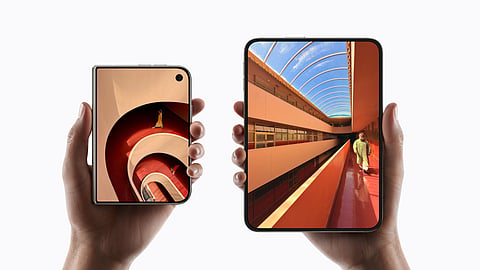
After two iterations of the iPhone Pro crafted with aluminium, Apple goes back to titanium for the iPhone Duo. It adds to the heft (254 gm) of the device but lends it a premium vibe. The Duo’s durability credentials also get a boost with an IP68 rating for splash, water and dust resistance. Apple opts for a passport-style form factor for the Duo; this is likely to be the preferred form for foldable smartphones as more users are discovering the benefits of three display orientations (including the smaller cover display) that ‘opens’ up multiple new user experiences.
The talking point for the iPhone Duo is the versatile display. You get two Super Retina XDR OLED displays: the 5.4-inch cover display (1398 x 2034 pixels) and the 7.6-inch Super (1878 x 2670 pixels). Both displays (that peak at 5000 nits) offer excellent colour reproduction and visibility across lighting conditions. But they both offer very different user experiences. The glossy cover display is perfect for everyday tasks, it’s the larger primary display that’s the star of the show with a matte display coating. It masks the crease and curtails screen glare. It’s a clever solution that works well for most apps. Most apps are still being optimised for the Duo, creating black bars and occasional navigational challenges. However quite a few apps like Netflix have been optimised for the Duo’s unique 1.41:1 aspect ratio creating a immersive viewing experience. The Duo offers a similar experience as an iPad mini, except this is a device you can fold and slip into your skinny jeans.
The Duo can be a bit of a learning curve if you’re moving from an earlier iPhone but that’s the fun part. There’s no Face ID and the volume rocker now sits on top of the device. At the heart of the iPhone Duo is the A20 Pro chip that also powers this year’s iPhone 18 Pro twins. It gives the Duo extra wings and aced our tests. It also boosts the Duo’s multi-tasking capabilities. This is a device that can double up as an entertainment and productivity companion. Battery life is quite solid for a foldable smartphone too. Most users should get through the day without reaching for the charger. The Duo offers up to 60W of wired charging and 25W of wireless charging, allowing you to power up your device in quick time.
The iPhone Duo features a rear camera that’s similar to the iPhone 17. The dual rear cam blends a 48MP primary lens and a 48MP ultra-wide lens, there’s no telephoto cam in the mix. You also get two front facing cameras (12MP cover screen camera and a 4MP inner screen under-display camera) but you’re more likely to use the primary lens to snap selfies, that’s one of the inherent advantages of a foldable smartphone. The iPhone Duo offers an all-new iPhone user experience that works best when you unfold the device. It comes with a stiff price tag, but that’s a price early tech adopters and iPhone fans might be willing to pay for an all-new smartphone experience. (Rs 2,99,900 onwards)
