
- Chennai
- Tamil Nadu
- India
- World
- EntertainmentEntertainment
- Business
- Sports
- Lifestyle
- Technology
- Videos
- Explainers
- Editor's Picks

What first drew you to winemaking and how did that journey eventually lead to Vineyard Melody?
My relationship with wine began when I was studying hospitality. I had always been fascinated by food, flavours, wine culture and the art of bringing people together around a table. I got married after completing my graduation. With many restrictions, my life became dull. In 2017, I reached a turning point in my life. I moved to Bordeaux, France, to restart my life from scratch, but had to leave my nine-year-old daughter in the care of my parents.
I pursued an MBA in wine and immersed myself in the domain, learning about different regions, attending auctions and wine fairs, visiting vineyards and learning about the extraordinary patience and precision behind every bottle.
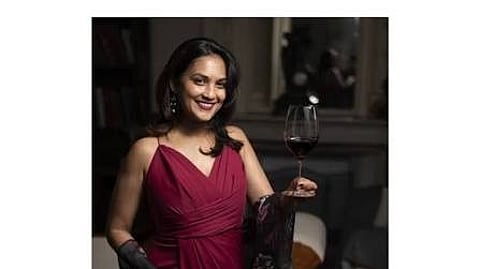
I saw that the wine trade was largely male-dominated, and entering it as an Indian woman and a woman of colour came with its challenges. But those challenges only strengthened my resolve. Eventually, my fascination became an entrepreneurial journey. I started my merchant business, Wine Equation, and launched my own wine brand, Solicantus, in 2020. The same year, I wrote my memoir, 'Vineyard Melody', which was published in February this year in the US.
The vineyards of Bordeaux became a metaphor for my own journey: you prune, you endure the seasons, you withstand storms, and eventually, you bear fruit. My memoir is about that same process of transformation: from an abused housewife to a woman who healed, reinvented herself, became an entrepreneur in the wine world and fought to reunite with her daughter.
What was the most challenging part of turning your journey into a book?
The hardest part was revisiting experiences from my past that I had tried to bury in the deepest of oceans. I wanted to move ahead and not look back. I was not only writing about my past, but also about the emotions I felt when the abuse happened. I had to return to moments of fear, humiliation, helplessness and uncertainty, and give them a voice. Vineyard Melody is not only a story of suffering; it is a story about awakening, resilience and rebuilding your life with every ounce of strength you have. Wine and entrepreneurship became important because they represent the woman I have become today.
How has living and working in France shaped your understanding of wine and what have you learned from the country’s winemaking traditions?
Living in France taught me that wine cannot be separated from its sense of place. In Bordeaux, I came to understand the importance of terroir. Wine was not just a beverage; it was a living expression of a place, its soil, climate, history and people.
I also learned that great wine is rarely about instant gratification. It is about patience. A vineyard cannot be rushed; the seasons dictate the rhythm. That philosophy had a profound effect on me personally because I was also learning to rebuild my life, one grape at a time.
French winemaking traditions taught me to respect heritage while remaining curious about change. There is enormous pride in tradition in France, but there is also an understanding that every generation has to interpret that tradition in its own way. I think that is a lesson that extends well beyond wine.
What have been some of the biggest lessons you’ve learned while building a career in the wine industry?
The first lesson is resilience. Entrepreneurship rarely follows a straight line, and the wine industry can be particularly demanding because it is built on relationships, reputation, patience and long-term thinking.
I also learned not to be intimidated by rooms where I was initially the outsider. I came from India, entered a predominantly male industry in France and had to establish credibility in a world that I was still learning to navigate. I learned to ask questions, to listen, to educate myself constantly and, most importantly, to trust my own instincts.
Another important lesson has been that a business is not built only on a good product. It is built on authenticity, relationships and the ability to pivot when things don’t work as planned. The magic is learning to dance in the storms, because every storm is a lesson. I started looking at problems in a very different light.
Is there a particular grape variety or wine region that you keep returning to, and why?
I keep returning to Bordeaux, both emotionally and through my work. It was the region that became the backdrop to my transformation. As a grape variety, I love the expression that aged Merlot brings to the table. The depth, concentration, richness and elegance all come together beautifully. For a long time, Cabernet Sauvignon has fascinated me. It has structure, character and the ability to evolve beautifully with time. I think there is something deeply symbolic about that. A young Cabernet can be powerful and intense, but with patience, it develops greater elegance and complexity.
I have a particular affection for the wines of the Left Bank because that is where my second life began. For me, wine is inseparable from memory, and every time I taste a wine from that region, I am reminded of the vineyards, the beautiful people I met and the extraordinary five months I spent there healing from the trauma of my past.
For someone who is just beginning to explore wine, what would you recommend they start with?
I would tell a beginner not to be intimidated by wine terminology. Wine is ultimately about enjoyment and discovery, not about passing an examination.
Start with wines you naturally enjoy. If you prefer something fresh and crisp, try a Sauvignon Blanc. If you enjoy softer, fruit-driven reds, Merlot can be a friendly place to begin. If you want to understand the structure and complexity of red wine, explore a Bordeaux blend or a Cabernet Sauvignon.
Most importantly, taste widely. Try the same grape from different regions and notice how the wine changes. Keep a small record of what you like. And don’t worry about having the “right” answer; your palate is your own.