
- Chennai
- Tamil Nadu
- India
- World
- EntertainmentEntertainment
- Business
- Sports
- Lifestyle
- Technology
- Videos
- Explainers
- Editor's Picks
CHENNAI: Remember the days when people would spend days planning the perfect prank for April 1? In Chennai, April Fools’ Day wasn’t always about instant reactions. It lived in the slow build of a joke, carefully plotted in school corridors, whispered over landlines, or staged in familiar neighbourhood streets where the audience was small but invested. The laughter came easily, lingering in shared spaces, rooted as much in trust and timing as in the punchline itself.
Today, that rhythm has shifted. The prank has gone digital, faster, wider, but far less personal. A message flashes across screens in seconds, often disguised as breaking news or delivered with deadpan irony, blurring the line between humour and discomfort. The reach has expanded, but the connection feels fleeting.
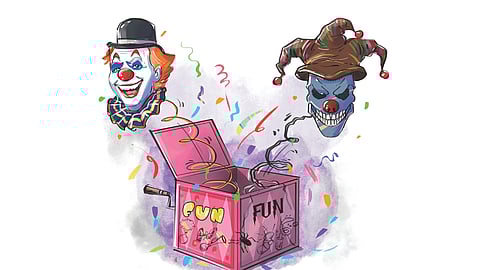
Alongside this, the tone of humour has evolved. What was once harmless and playful now often leans into darker territory. The joke lands, but not without a pause, a moment of doubt, a second look at what’s real and what isn’t.
Ramakrishnan still vividly remembers the best April 1 prank played on him during his college days. “My friend came running to me, saying there was a telegram waiting at the post office from home. In those days, a telegram meant only two things: either good news or bad. I panicked and rushed all the way, only to find nothing. By the time I returned, everyone was laughing. I was annoyed for a few minutes, of course, but we ended up laughing about it the whole evening. That’s the whole point. Pranks should stay with us as stories, not as something unpleasant,” shares the 68-year-old.
Bharatanatyam exponent Vidya Bhavani Suresh is not a big fan of pranks. But she recalls being pranked by her husband’s cousins after her wedding on April 1. She says, “At that time, I didn’t know most of my husband’s relatives. When his cousin and his wife came home asking for ‘Thambi’ (my husband’s nickname), I was confused. When they kept insisting, I got annoyed. Realising the situation, they burst into laughter immediately. Though I was angry, I found it quite cute and ended up chuckling.”
Many Chennaiites are huge fans of RJ Sarithiran’s pranks on both radio and television. “The pranks I did were mostly friends-to-friends or harmless public pranks. I knew my boundaries and was always careful not to overdo things. Back then, people took things lightly and sportively. On a scale of 100, only about five per cent would get annoyed. But now, the situation is almost the opposite,” he notes.
According to Sarithiran, playing pranks is an art. “Over time, I shifted my focus to using this art to create awareness about road safety and more,” he adds.

Speaking about how new-age pranksters approach their content, YouTuber Surya says, “The most successful pranks aren’t about the ‘gotcha’ moment. It’s about balancing emotions, starting with something sentimental and then introducing a chaotic twist. When viewers see genuine reactions, especially from family, they relate to it. That’s how a simple prank becomes a viral story.”
In the world of social media, going viral is often the goal. “Pranking someone becomes a tool to reach that destination. To truly go viral, the reaction has to feel real. You’re not just trying to fool the person in the video, but also convince the audience that what they’re seeing is 100 per cent authentic,” adds the 25-year-old.
However, concerns around modern pranks remain. “Respect, language, and concepts are changing, and sometimes crossing the line into dark humour. The responsibility lies with pranksters to draw that ethical line. A prank is successful only when everyone laughs. If it causes pain or disrespect, it’s no longer a joke,” he says.
Agreeing with him, Sarithiran adds, “It’s a very thin line and pranksters need to be careful about whom they target and how.”
Ramakrishnan feels that today’s humour can sometimes be too sharp. “It touches on serious topics like health, relationships, and even death, and presents them casually. Maybe younger people see it as bold or clever, but for me, the line between humour and insensitivity feels very thin.”
Ramakrishnan believes it was the effort and involvement that made older pranks special. “Because you knew the person well, you also knew where to stop. There was an unspoken line. The effort made it feel warmer. Even if you were fooled, you felt included in the joke,” he says.
RJ-actor-prankster Sarithiran continues to follow this old-school approach. “When I do prank calls at a listener’s request, I first gather all the details about the person from their friend. It’s important because you need to know who you’re dealing with. Not everyone reacts the same way. Healthy pranks should feel light and enjoyable,” he explains.
Comparing digital and in-person pranks, Surya adds, “Digital pranks focus more on editing, with 4K quality, cinematic visuals, music and the perfect thumbnail. But in-person pranks are about nerve. There’s no undo button. You have to stay in character while your heart is racing. It feels more real. It’s definitely inconvenient; you need props, the right location, and perfect timing. But for a creator, that’s part of the hustle.”
Unlike earlier jokes meant for all audiences, there is now a rise in pranks that use dark humour or inappropriate language, making them suitable only for a select audience. Acknowledging this, Sarithiran says, “Yes, there is a trend of pranks going overboard with language and concepts. While I believe pranks should be light-hearted, there is still an audience that enjoys darker humour.”
Vidya Bhavani Suresh agrees that pranks should remain harmless. “I wouldn’t encourage a stranger to crack twisted jokes on me,” she adds.
Ramakrishnan believes older pranks are remembered fondly because they balanced humour with kindness. “The joke was never bigger than the person. Even when someone was fooled in public, it felt harmless. You could sit with your family and watch it without discomfort. Now, it feels more about reaction than joy, how extreme or surprising it can be. Do I miss the old shows? Yes, I do. They remind me of a time when humour felt lighter and you didn’t have to think twice before laughing,” he reflects.
As the city celebrates another April Fools’ Day, Chennai stands between two distinct eras of mischief, one shaped by effort and intimacy, the other by speed and scale. Somewhere in this transition lingers a quiet question: has the joke changed, or have we?