
- Chennai
- Tamil Nadu
- India
- World
- EntertainmentEntertainment
- Business
- Sports
- Lifestyle
- Technology
- Videos
- Explainers
Chennai
In the city to host a workshop on professional kite-making is Rajesh Nair, a resident of Kochi. He is also the founder of Kite Life Foundation, which has conducted kite flying festivals in various locations like Kochi, Shimoga and Puducherry.
His intention is clear — to create kites that can soar into the skies and encourage many more to become kiters, thereby preserving this 3,000-year old tradition.
A coffee table book titled A Kite’s Eye View, India: Between Earth and Sky by Nicolas Chorier was brought out nearly a decade ago and in it were stunning images of the country taken by a camera attached to a kite! Flying high over the country’s landmark buildings as well as the landscapes, the kite was able to capture magnificent images that are sure to be vivid in the minds of those who’ve read the book.
“Nicolas is a dear friend of mine,” smiles Rajesh, who believes that kite-flying is more an art than activity for him.
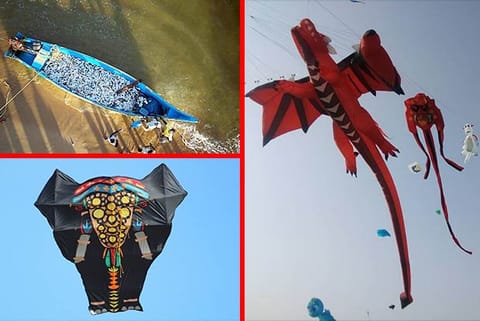
“As a child, I grew up making and flying kites — it was creating them that truly fascinated me,” he narrates. Right from Ravana to a decked up elephant, he has made it all because he gets to present India’s heritage and culture to the world.
“It is a way of expressing freedom for me. The one thing I try to advocate through Kite Life Foundation is that we encourage anyone and everyone to come together as a community, irrespective of caste or creed, and become master kite-makers,” says Rajesh.
Further explaining, he says, “I want people to know that it’s not only ‘K for kite’ but so much more than that. We train people to take part in kite flying competitions, which is taken very seriously abroad — you need to use sport kites that have multiple lines and requires vigorous training before you can enroll. Also, there are art kites which are easier to fly and making them in different shapes and sizes is a great way of promoting the country from the tourism angle.”
A strict policy Rajesh follows while conducting kite-making and flying workshops is that manjhas (threads covered with ground glass and glue) are not to be used.
“There are laws which condemn and punish the use of these ‘killer’ threads. So we use only cotton strings. I’m not in favour of kite fights either,” he says.
At these workshops, he also educates the participants about the origin of a kite, how it was used as military signalling in wars, the different materials it can be made from and the science behind it.
“The aerodynamics of a kite involves a bit of physics, geography and mathematics but it’s a refreshing change from what’s taught in school,” he goes on to say adding, “So many people take interest in this activity that I’ve lost count of how many students I’ve had!” He grew up in Kozhikode with ample space to fly kites on the beaches and paddy fields there and urges Chennaiites to make full use of the coastlines here by becoming kiters.
“It’s both a sport and an art that can bind people together irrespective of boundaries,” he concludes.
Visit news.dtnext.in to explore our interactive epaper!
Download the DT Next app for more exciting features!
Click here for iOS
Click here for Android
