
- Chennai
- Tamil Nadu
- India
- World
- EntertainmentEntertainment
- Business
- Sports
- Lifestyle
- Technology
- Videos
- Explainers
- Editor's Picks

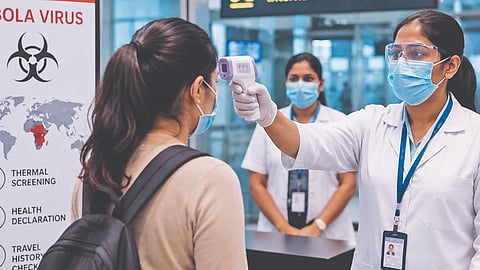
CHENNAI: Stepping up infectious disease surveillance amid renewed global concern over Ebola Virus Disease (EVD), the Union Ministry of Health and Family Welfare has issued an extensive advisory for airlines, airport authorities, international travellers and Indian nationals residing in affected African regions, emphasising early detection, rapid isolation and strict contact-tracing measures to prevent any potential spread of the virus into the country.
The advisory described Ebola as one of the world’s most lethal viral infections, with previous outbreaks recording mortality rates from 50-60%.
It said the disease spreads through direct contact with the blood, secretions and bodily fluids of infected persons or contaminated objects, while cautioning that international air connectivity remains a critical factor in the risk of cross-border transmission. The incubation period ranges from 2-21 days, with symptoms including fever, weakness, muscle pain, headache and sore throat, followed in some cases by vomiting, diarrhoea, rash and bleeding manifestations.
“There is no vaccine or curative therapy available,” the advisory noted, while stressing that supportive medical care and early diagnosis significantly improve survival chances.
Airlines have been instructed to maintain stock of first-aid equipment, disposable gloves, hand sanitisers and universal precaution kits onboard aircraft. Cabin crew have been directed to isolate passengers displaying symptoms, minimise physical interaction, ensure use of protective equipment and immediately alert destination airport health authorities before landing.
Airlines have been instructed to maintain stock of first-aid equipment, disposable gloves, hand sanitisers and universal precaution kits onboard aircraft
“In view of the current threat of Ebola Virus Disease (EVD), travellers who have fever, weakness, muscle pain, headache, sore throat, vomiting, diarrhoea, rash or bleeding should report immediately to airline crew and immigration or medical authorities on arrival,” the advisory said.
The ministry has also called for stringent passenger tracing protocols in flights carrying suspected cases. Passengers seated adjacent to symptomatic travellers, crew members who handled them and cleaning personnel involved in disinfecting aircraft sections may be subjected to monitoring and follow-up surveillance.
Indians in Ebola-affected countries have been advised to avoid contact with infected persons, animals and contaminated materials, maintain strict hand hygiene and immediately report symptoms to health facilities. Travellers returning to India from affected regions have been asked to self-monitor for symptoms for 30 days and seek medical attention if illness develops.
Ebola is a serious, life-threatening type of viral hemorrhagic fever — a viral infection that damages your blood vessels.
Ebola outbreaks reported in West, Central and East Africa. Ebola viruses start in:
Antelope
Fruit bats
Non-human primates (apes and monkeys)
Symptoms start off like the flu (influenza) such as...
Chills
Feeling very tired (fatigue) and weak
Fever
Loss of appetite
Muscle pain
Severe headache
Sore throat
These, if left untreated immediately, can progress to...
Black, tarry stool
Bleeding or bruising
Confusion
Diarrhoea that may be bloody
Rash or spots of blood under your skin
Red bloodshot eyes
Vomiting blood or look like coffee grounds
Later Ebola stages can be severe...
Brain inflammation (encephalitis)
Organ failure
Seizures
Body goes into schol due to lack of blood flow (shock)
From surfaces, objects or medical devices that come into contact with the virus, or by eating the meat of infected animals or contact with body fluids of infected animals (spillover event) or humans such as
Amniotic fluid
Breast milk
Urine and Stool
Semen
Saliva
Sweat
Yes, Ebola can transfer through sexual intercourse that involves the semen of an infected person.
Yes, you can survive Ebola. Though fatality rates are upto 90% for certain strains, your chances of survival depend heavily on the following:
Early medical care: Rehydration (intravenous fluids), maintaining BP, and managing symptoms
Strain of the virus: Zaire species is historically more lethal if untreated, whereas other strains like the Sudan or Bundibugyo viruses have lower average death rates.
Targeted therapeutics: FDA-approved treatments available specifically for the Zaire ebolavirus