
- Chennai
- Tamil Nadu
- India
- World
- EntertainmentEntertainment
- Business
- Sports
- Lifestyle
- Technology
- Videos
- Explainers
- Editor's Picks

The study adds to growing evidence from the US and Europe that increased blood erythritol levels are linked to a higher risk of cardiovascular and cerebrovascular events like heart attack and stroke
CHENNAI: For millions of health conscious Indians who have been rapidly switching from white sugar to ‘zero-calorie’ drinks and artificial sweeteners, the results of a recent study might come as a bitter pill to swallow.
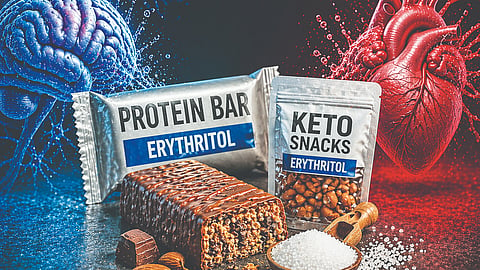
Erythritol, a common artificial sweetener that is widely found in protein bars, sugar-free snacks, keto snacks and soft drinks has been linked to potential damage to the brain’s natural security system.
According to a study from the University of Colorado that was published in 2025 in the Journal of Applied Physiology, erythritol may harm the blood-brain barrier, which is considered as a critical membrane that protects the brain from harmful substances while helping the organ absorb nutrients. Researchers warn that this damage could lead to blood clots and significantly increase the risk of ischaemic stroke that is commonly caused by blocked blood vessels in the brain.
Erythritol is a kind of sugar alcohol that is a naturally occurring compound also produced in tiny amounts by the human body. Unlike aspartame or sucralose, it is often marketed as a ‘natural’ alternative because it is found in fruits like melons and grapes.
For food makers, the main appeal is that erythritol provides about 70-80% of sugar’s sweetness without the loaded calories. Apart from this, it also does not spike blood sugar levels, making it a favourite among those suffering from diabetes and people who are on keto diets.
In India, it is increasingly used in health drinks, low-calorie sweets and packaged protein products like protein bars and shakes. However, the new findings suggest that ‘natural’ does not automatically mean ‘safe’ when consumed in large quantities on a regular basis.
Speaking to DT Next, diabetologist Dr V Mohan, chairman of Dr Mohan’s Diabetes Specialities Centre, said, “While Indians primarily use stevia and sucralose to substitute white sugar, gradually erythritol and xylitol products have entered the market. This is a cause for concern. Many people who are not diabetics but keen on losing weight consume drinks and snacks that are loaded with erythritol thinking that it would help them cut down on calories and reduce sugar spikes. Sadly not many know the after effects of such actions.”
As per the study, during the lab experiment, researchers exposed the microvascular endothelial cells in the human brain, the cells that form the protective lining of blood vessels in the brain, to a 6 mM concentration of erythritol for 24 hours.
Scientists chose the specific dose as it mirrors the amount of erythritol found in a standard 30 gram serving present in a regular artificially sweetened beverage. The results were concerning as researchers noted that the erythritol triggers a condition called oxidative stress.
Once dunked in erythritol, the artificial sweetener flooded the cells with harmful molecules known as free radicals while simultaneously lowering the body’s natural antioxidant defences.
Weakened blood vessels: The sweetener disrupted two key molecules — nitric oxide (which relaxes vessels) and endothelin-1 (which constricts them). The result showed that the blood vessels constricted to dangerous levels which starved the brain of oxygen.
Blocked natural ‘clot busters’: Normally, when a clot forms, our cells release an enzyme called tissue plasminogen activator (tPA) to dissolve it. However, erythritol destroyed this protective mechanism which let clots freely travel to the brain.
The study noted that while the cells tried to defend themselves by producing more antioxidant enzymes, the defence mechanism was insufficient which led to oxidative stress peaking subsequently leading to cause more damage to the brain cells.
For many Indians trying to lose weight or manage diabetes, erythritol has been a go-to option. Consuming the artificial sweetener helped patients to reduce calorie intake and also prevent sugar spikes. It is often promoted as a safe alternative for diabetics and those managing weight.
But the new research poses a tough question which leaves one wondering if the benefit of avoiding sugar was worth the risk of weakening the brain’s protection over time. Apart from this, the study adds to growing evidence from the US and Europe that increased blood erythritol levels are linked to a higher risk of cardiovascular and cerebrovascular events like heart attack and stroke.
“While sucralose continues to be the sugar alternative of choice, studies have shown that unchecked use of erythritol causes several side effects such as developing blood clots leading to stroke. Apart from this the user’s gut microbes get damaged too causing stomach upset,” warned Dr Mohan.
He also noted that the WHO had put out warnings against rampant use of erythritol for weight loss as it potentially increased cardiovascular risks and type 2 diabetes, especially in high risk individuals.
While authors of the study noted that “sweeteners like erythritol can be valuable tools for weight management and diabetes prevention, regular consumption potentially weakens the brain’s protective barriers and increases cardiovascular risk, the benefits may come at a significant cost.”
However, the study also cautioned that people should not jump to conclusions and ban erythritol completely as the study was conducted on isolated cells in a laboratory and did not have any human trials which could skew the results.
While you do not need to panic, the study suggests that ‘natural’ does not always mean ‘safe’ in large amounts. If people regularly consume diet sodas or sugar-free products containing erythritol, they should take time off to check labels and reduce the intake until there is more clarity about its long-term effects on brain health.
While recalling a study conducted at his centre on the impact of using sucralose in beverages, Dr Mohan said that the team noticed several benefits among patients such as improved sugar levels among weight and waist loss in patients. “Consuming artificial sweeteners is not the issue; it is just that people have to choose the type of sweetener wisely. Like everything else, moderation is key,” explained the diabetologist.
Read labels carefully: Erythritol is often hidden in ‘sugar-free’, ‘keto-friendly’ and ‘low-carb’ packaged foods
Moderation is key: An occasional diet drink may not be dangerous, but daily consumption of multiple erythritol-sweetened products could be risky
Go back to basics: Instead of reaching for artificially sweetened products, consider natural options like plain water, herbal teas or small amounts of unrefined sugar if you do not have diabetes