
- Chennai
- Tamil Nadu
- India
- World
- EntertainmentEntertainment
- Business
- Sports
- Lifestyle
- Technology
- Videos
- Explainers
- Editor's Picks

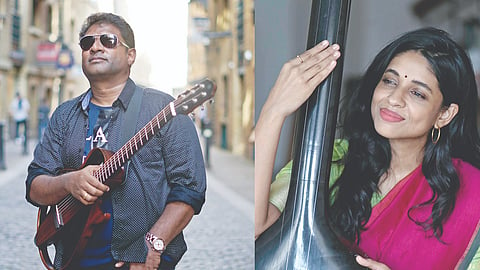
CHENNAI: For musician Devan Ekambaram, the past 48 hours have been a “massive blur”. The overwhelming response followed the news that his independently produced song Varuvaaiy has earned a nomination in the Best Global Music Performance category at the 2027 Grammy Awards.
“It has been very emotional because this is a reward for the work I have put in over the past 29 years since I came to Chennai. To receive this recognition now is massive for me,” he says.
The Nenjikkul Peidhidum singer has spent nearly three decades exploring different facets of the entertainment industry, from dubbing and acting to playback singing. He has also worked with celebrated composers, including Ilaiyaraaja, AR Rahman, Vidyasagar, Deva, Yuvan Shankar Raja and Harris Jayaraj. However, creating his own music has always been his ultimate ambition, making this nomination particularly special. He has been working towards this goal since 2021, when he became a member of the Recording Academy, the organisation behind the Grammy Awards.
For Ekambaram, the recognition goes beyond personal achievement. He hopes it will encourage aspiring independent musicians to pursue their dreams, regardless of their backgrounds. “All I want to show through this is that if I can do it, anyone can. I don't come from a musical background. I quit my studies at 20 to create music and told my parents that I wanted to take the risk of pursuing my passion,” he recalls. He believes that trying and failing is better than never taking a chance.
The nominated song is part of Ekambaram's larger ambition to create an album featuring musical interpretations of poems by poet and social reformer Subramania Bharathiar. Expected to be released by June next year, the album's first pilot project is Varuvaaiy. The song was suggested by vocalist Subhiksha Rangarajan, popularly known as Susha, who is also a co-nominee.
“When I learned that he wanted to work on an album based on Bharathiar's poetry, I wanted to pick something that wasn't mainstream or an obvious choice. I wanted to discover a poem that would surprise people. That's how I came across Varuvaaiy. I sang it for him, and he immediately liked it. He then jammed a few chords, and the song gradually took shape,” Susha explains.
The collaboration came naturally, particularly given her comfort with Carnatic music. The song was recorded at Ekambaram's residence and several unconventional locations rather than in a conventional recording studio.
For Ekambaram, revisiting Bharathiar's works is also about making the poet's ideals relevant to contemporary audiences. He believes Bharathiar's thoughts on humanity, women's empowerment, the abolition of caste discrimination and the right to live with dignity remain deeply relevant.
“He stood for humanity, women's empowerment and the abolition of caste. He believed in humanity and the idea of letting others live. I place him in the same category as Mahatma Gandhi and Nelson Mandela,” he says. Through the album, he hopes to introduce Bharathiar's poetry and philosophy to a wider global audience.
Making Carnatic music more accessible is another driving force behind the project. Although introduced to the tradition by his mother, Ekambaram admits that he did not initially find it appealing. That experience made him think about how he could reinterpret the music in a way that would connect with listeners beyond its traditional audience.
Susha shares a similar outlook. “I want to share our music with people who think they won't enjoy or appreciate it. There is a certain bias when something is labelled classical or Carnatic. I want this music to travel beyond our small circle, and that is what excites me most,” she says.
She also sees strong connections between Carnatic music and jazz, two traditions that have shaped her musical journey. “They are actually sister music forms, particularly in the way they approach composition and improvisation. Improvisation is a major component of both traditions, and that is their main connecting factor,” she explains.
Her interest in taking Carnatic music to new audiences is also reflected in her collaborations with other genres. Her debut album, Love Language, released this year, follows a similar musical approach.
For Susha, Varuvaaiy is also a song about personal and collective transformation. “The central theme is about growth, welcoming goodness and fighting evil. Krishna becomes the vehicle through which we explore ideas of growth and prosperity,” she says.
As the Grammy nomination brings international attention to their work, Ekambaram sees it as an encouraging moment for independent music and a significant acknowledgement of Tamil poetry and Carnatic music. “It is also a credit to Tamil, Bharathiar and Carnatic music. To be nominated alongside legends like Shakira, KerreKe and others, I feel so lucky,” he says, reflecting on a recognition that has taken nearly three decades to arrive.