
- Chennai
- Tamil Nadu
- India
- World
- EntertainmentEntertainment
- Business
- Sports
- Lifestyle
- Technology
- Videos
- Explainers
- Editor's Picks
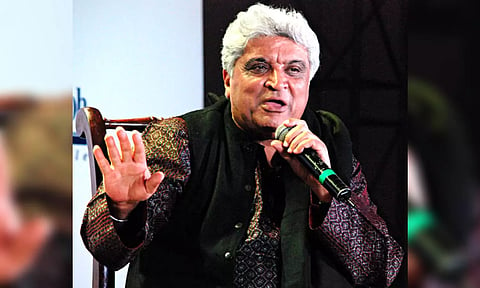
PUNE: India is a talented and intelligent country, but opportunities for education are becoming increasingly inaccessible to children from poor families, legendary writer-poet Javed Akhtar said on Saturday. Akhtar also took a swipe at the education imparted in madrasas and gurukuls, claiming children emerging from such institutions would have minds filled with poison.
He was speaking after receiving the Mahatma Phule Samata Award 2026 from Maharashtra minister and NCP leader Chhagan Bhujbal at a ceremony organised by the Akhil Bharatiya Mahatma Phule Samata Parishad here to mark the death anniversary of social reformer Mahatma Jyotiba Phule.
"India is a talented and intelligent country, but opportunities for education are becoming increasingly inaccessible to children from poor families. An ordinary person can achieve a great deal if given an opportunity, but even basic educational opportunities are being denied to many," he said at the event.
Education has become expensive, and only a certain class can afford it, he added.
"If there are no public schools, where will a rickshaw puller's child study? If the child goes to a school with poor education, there won't be good teachers, a proper system or a good curriculum," he said.
"When a child comes out of a madrasa or a gurukul, his mind will be filled with poison. This is what is happening," Akhtar further claimed.
Asserting that education was the government's responsibility under the Constitution, he asked why the government, which claims to provide food to 80-85 crore people, cannot give education to the same number of people.
"Is education less important than food? The stomach may be full, but the head will remain empty. Why do you want the head to remain empty? Education is as important as two meals a day. If you educate a person, he will not have to ask you for two meals a day," Akhtar emphasised.
He also slammed the scenario in which those raising complaints about irregularities in examinations are being branded as anti-national.
"If you care about the country, let anyone call you anti-national. Consider it another Padma Bhushan," he advised the youth.
India might take some time to move forward, but nobody could stop it from progressing, he said, citing the country's history and its significant contributions to astronomy, mathematics, philosophy, languages, scripts and music.
He described the Sanskrit script as one of the most logical and scientific writing systems.
India fell behind in technology after the Industrial Revolution, he said.
"This was due to the caste system, which denied education to people engaged in physical labour. This prevented the country from developing basic technologies such as vacuum cleaners, washing machines and tractors, despite its achievements in mathematics and other fields," he claimed.
Innovations from blacksmiths, potters and farmers could not emerge as these segments were denied access to education, he said, adding that caste discrimination continued to exist despite the passage of several centuries.
The closure of government schools, established to provide education to poor children, was once again pushing education into the hands of privileged sections, Akhtar said.
Paying tribute to Mahatma Jyotiba Phule and Savitribai Phule for their contribution to education and social reform, Akhtar told the gathering that he did not consider himself worthy of the Mahatma Phule Samata Award.
"Their work was extraordinary. Educating people from disadvantaged sections of society was considered against religious practices at the time. The place associated with the Phules is a great temple where people should bow their heads and learn from their work," he said.
