
- Chennai
- Tamil Nadu
- India
- World
- EntertainmentEntertainment
- Business
- Sports
- Lifestyle
- Technology
- Videos
- Explainers
- Editor's Picks
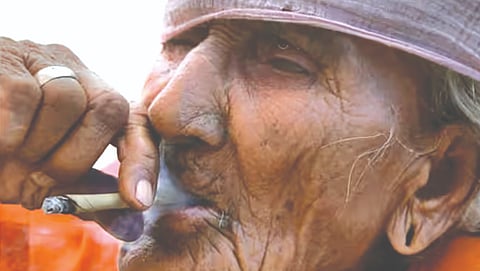
Tackling tobacco dependence through sustained cessation support, alongside controlling high blood pressure, is crucial to reducing India's stroke burden, experts said on the eve of World Stroke Day, calling for a stronger public-health response that goes beyond awareness campaigns.
A 2024 analysis of Global Burden of Disease data estimated that tobacco use contributed to 12% of stroke deaths in India, while high systolic blood pressure accounted for 56%, highlighting the need to address multiple risk factors through prevention and timely intervention.
"We cannot keep telling people to quit and assume the problem is solved. Nicotine dependence can make quitting difficult,” Dr Yashpal Singh Bundela, Director of Neurosurgery and Neurosciences at Medanta Super Speciality Hospital, Noida, said.
Bundela said helping people stop smoking must remain the priority, supported by practical, sustained cessation services and access to clinically established aids such as nicotine replacement therapy (NRT).
The World Health Organisation estimates that tobacco use accounts for nearly 1.35 million deaths annually in India. The country's tobacco consumption extends beyond cigarettes to bidis and smokeless products such as khaini, gutkha and zarda, requiring cessation strategies tailored to different patterns of use.
Experts said nicotine dependence should be treated as a public-health challenge rather than merely a matter of individual willpower. They argue that smoking can contribute to stroke by affecting blood vessels and promoting processes that increase the likelihood of blood clots.
Bundela said access to cessation services, including counselling and clinically established treatments, should be strengthened to help tobacco users quit and prevent relapse.
International experiences could offer lessons for India, but experts cautioned that changes in tobacco-use patterns should be assessed carefully before drawing conclusions about their health impact.
A nationally representative Japanese study published in 2026 found that cigarette use among people aged 15-64 declined from 20.7% in 2017 to 12.3% in 2025, while heated tobacco use increased from 5.3% to 11.7% .
Dr Sonia Lal Gupta, Senior Consultant Neurology and Joint Managing Director, Metro Group of Hospitals, said stroke, once widely perceived as a medical emergency primarily affecting older adults, was increasingly becoming a concern for younger populations as well.
She warned that uncontrolled hypertension, diabetes, obesity, smoking, sedentary lifestyles and delayed recognition of symptoms can significantly increase the risk of stroke.
Experts highlighted the urgent need for greater public awareness, early identification of warning signs and timely access to emergency treatment.
"A stroke happens when a blocked or bleeding vessel cuts off brain blood flow, damaging cells within minutes. Though more common with age, strokes can strike at any stage of adulthood," Gupta said.
Medical experts point out that one of the biggest challenges in stroke management is the failure to recognise symptoms immediately.
"Sudden facial drooping, weakness in one arm, difficulty speaking, loss of balance or unexpected vision problems are often dismissed as temporary discomfort. Such delays can reduce the chances of receiving time-sensitive treatment," she said.
