
- Chennai
- Tamil Nadu
- India
- World
- EntertainmentEntertainment
- Business
- Sports
- Lifestyle
- Technology
- Videos
- Explainers
- Editor's Picks
Adam B Kushner
Some athletes don’t just win they do so looking like artists. There is grace, economy, even magic in their movement. Think of Nadia Comaneci, Lionel Messi, Alysa Liu, Muhammad Ali. The archetypal example from tennis is Roger Federer, but he’s not the only one. Tennis is a sport where certain players are described as balletic. Why is that?
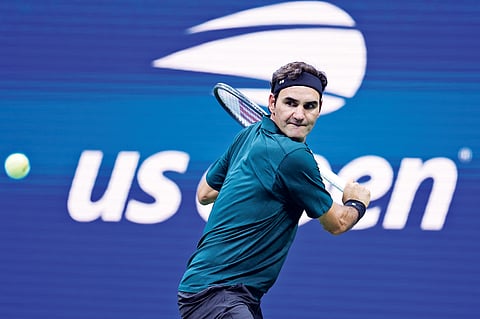
One reason is the one-handed backhand. When Federer struck it, he began with his back to the net and then unfurled like a fiddlehead fern, ending with his arms wide as if to say to his opponent: I dare you to answer. It was gorgeous to watch, especially as he danced across the baseline to prepare the shot.
The one-hander was once common. Now, though, it’s going extinct. The U.S. Open, which started Sunday, features only two men and two women in the top 50 who use it. So far, this is the first year since 1877 in which no one-handers have made it to the semifinals of a Grand Slam. “Players are getting stronger and whacking the hell out of the ball,” said Ava Wallace, who covers tennis for The Athletic, our sports publication. “You need two hands!”
Modern rackets. They’re now made of graphite and contain polyester strings, not just the springy animal guts (yes, really) that were threaded into old wooden rackets. That lets players put enormous topspin on the ball. It hits the ground and then arcs up high, where it’s tough to reach. A two-hander is much better at corralling a ball at shoulder height or above, especially if it’s rotating at thousands of revolutions per minute. The one-handed backhand is hit from the waist. (This is how Rafael Nadal’s topspin-heavy forehand confounded Federer’s backhand for years.)
They’ve gotten faster, and now the biggest servers can fire 150 mph missiles that leave the returner less than half a second to react with a defensive shot. Two hands give more control under pressure. (Maybe not to backhand, but the pros seem to manage.)
“Nowadays, probably the coaches are mostly doublehanded players, and it’s just easier to teach a kid,” Federer told The Athletic. It doesn’t require as much shoulder rotation or wrist strength to get the ball back.
This happens in sports: New tech and new tactics supersede the old ways. Basketball centers no longer use the hook shot; football teams abandoned the drop kick. Tennis has changed a lot, too. At most tournaments, computers, not line judges, say when a ball is out of bounds. Tweaks to hard courts, grass courts and tennis balls have slowed the pace of the game, making rallies longer and rewarding stamina and athleticism as players wallop the ball from the base lines. The serve-and-volley format is dead.
The result is a game that is more powerful, more flexible, more attacking. But it is also less artful, less exquisite. For my money, the best practitioner of the one-hander now is an Italian named Lorenzo Musetti, the world No. 14. Shots like his “hearken back to a slower and more beautiful game,” Wallace says.
